



Netflix’s new release Homebound tells the deeply moving true story of two hardworking and ambitious young Indian men whose lives were shattered during the 2020 Covid lockdown.
The film follows their journey back to their home village during the nationwide shutdown, where they are left stranded, a tragedy that ultimately leads to one of the friends dying from heatstroke.
Homebound has struck a powerful chord with audiences across India, receiving a nine-minute standing ovation at its debut screening. It has also been selected as India’s official entry for Best International Feature Film at the 98th Academy Awards.
Inspired by an acclaimed New York Times article by journalist Basharat Peer, originally titled Taking Amrit Home, later renamed A Friendship, a Pandemic, and a Death Beside the Highway, the film adaptation has already made a significant impact and is now set to reach a global audience through Netflix.
Asian Standard met with director Neeraj Ghaywan and the film’s two stars — Ishaan Khatter, who plays Mohammad Shoaib Ali, and Vishal Jethwa, who portrays Chandan Kumar — at an exclusive London venue to discuss this poignant story of friendship, hardship and survival.
A Moral Responsibility to Be Seen
Speaking about the film’s purpose, director Neeraj Ghaywan said it was vital to bring the stories of ordinary people to the screen.
“There is a moral responsibility to represent people from around the world who do not have a voice, to make their voices heard, to validate their existence, to make them visible,” he said.
Expanding on the themes explored in the film, Neeraj added:
“What makes people leave their homes?
It’s not just jobs; it’s not just money. It’s more complex.”
He explained that Homebound focuses on the struggles of migration, but also on the camaraderie between two men from marginalised communities.
“The battles that they went through — the camaraderie between two people who come from marginalised communities,” he said.
Crucially, the film does not portray the men solely as victims. Instead, it takes time to explore their family lives, dreams of joining the police force, and even their love lives.
“To see them as humans — to see their love, their joy, their love for biryani and cricket — not just as victims of the state,” Neeraj explained.
Stories of Dignity and Humanity
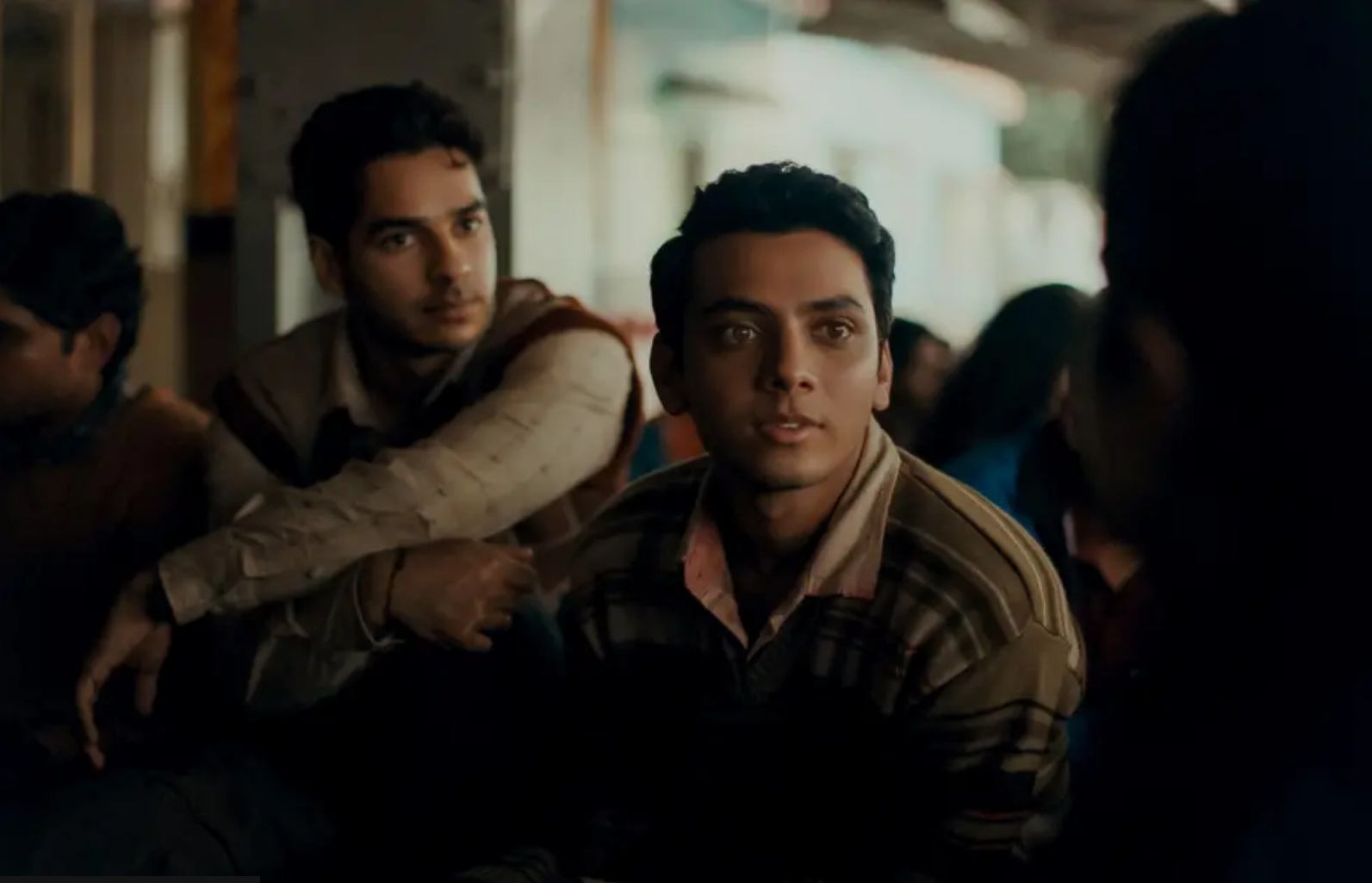
Both actors spoke about their pride in being part of the film and what drew them to their roles.
Ishaan Khatter reflected on the deeper meaning behind his character:
“The fight to live a dignified life. It’s so unfortunate to bear witness to the fact that society has different standards for people who come from where these men come from.
“It’s a hidden truth of society that is brushed under the carpet — something we don’t speak of.”
He also shared how immediately connected he felt to the script:
“What was really powerful for me was that it didn’t feel like a political argument — it felt like a conversation, a call for empathy.
“The scenes in this film are scenes from our daily lives that we might overlook — the microaggressions and coded discrimination we see all the time.”
Vishal Jethwa echoed those sentiments, speaking about the exhaustion faced by people constantly having to justify their existence.
“To have to prove your humanity every day — it’s exhausting,” he said.
The actors also reflected on the wider migrant experience portrayed in the film, as the two friends travel vast distances across India in search of education and work opportunities.
“All of that resonated when we read the script — the struggle, the strife, but also the humanity and the joy,” Vishal said.
Friendship On and Off Screen
The emotional weight of the story also strengthened bonds between the cast and crew. Neeraj explained how that chemistry translated on screen.
“We developed a chemistry — we spent time together and grew close. That core of affection is what you see reflected on screen,” he said.
“We created a safe space where we could be ourselves without fear of judgement. Despite

different viewpoints and beliefs, we learned to respect one another.”
Vishal added:
“We even had disagreements — like any friends would. Conflict is part of true friendship.”
Scenes That Stay With You
The film moves between lighter moments — such as the characters yearning for the simple pleasure of biryani — and devastating scenes of loss.
Asked which moment affected him most, Neeraj pointed to the closing sequence.
“Definitely the scene towards the end on the bridge. I was petrified of that scene — and so was Vishal,” he said.
“In the desert, with the sun coming up, he nearly passed out for real.”
Reflecting on filming the tragic final moments, Neeraj described it as a deeply personal experience.
“To portray that struggle — to hold on to a friend — that was a spiritual experience.”
The film closes with the surviving friend sitting near the bridge where the two once shared dreams of the future, accompanied by a dove — symbolising loss, resilience and hope.
From conversations with the cast and director, it is clear why Homebound has resonated so widely. Now reaching global audiences through Netflix, the film offers a powerful portrayal of struggle, dignity and friendship — a story that echoes the experiences of migrants everywhere.