


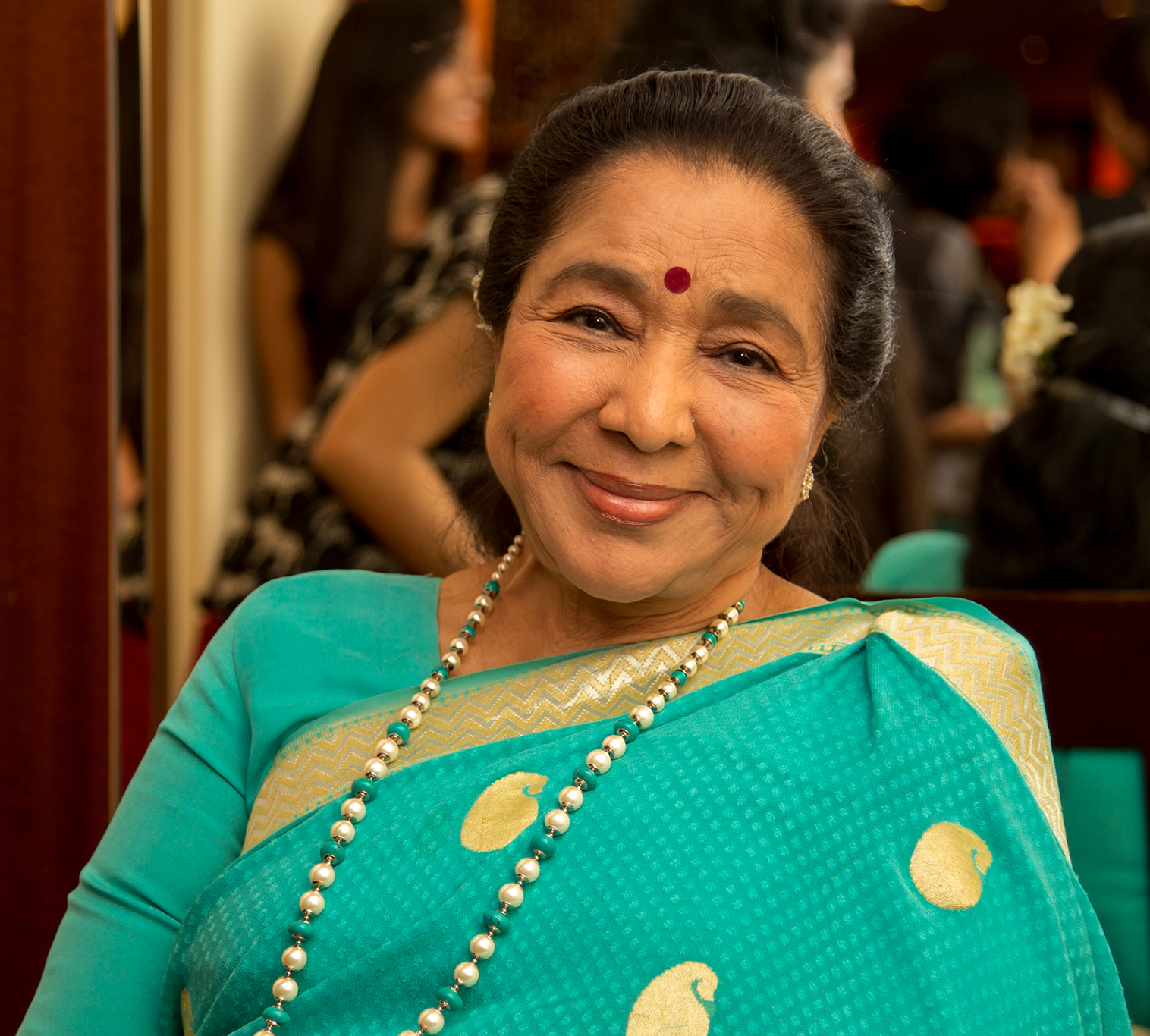
Asha Bhosle, one of the most enduring and versatile voices in Indian film music, has died at the age of 92. The veteran singer passed away on Sunday at Breach Candy Hospital following cardiac and respiratory complications that led to multi-organ failure.
Widely regarded as one of the last living legends of Indian playback singing, Bhosle’s career spanned more than seven decades, during which she captivated audiences in India and across the world. Her passing marks the end of an era in Hindi cinema’s golden musical tradition.
Born on 8 September 1933 in Sangli, Maharashtra, Asha Bhosle was the third daughter of classical vocalist Pandit Deenanath Mangeshkar. She began her musical journey at an early age, recording her first song, Chala Chala Nav Bala, at just 10 years old.
Her early years in the industry were marked by struggle, with initial chorus songs in Hindi films such as Chunariya (1948) and Andhon Ki Duniya. Her first solo Hindi playback came with Raat Ki Rani (1949), signalling the start of what would become an extraordinary career.
Bhosle’s breakthrough came through her celebrated collaboration with composer O.P. Nayyar, beginning with Naya Daur (1957). Their partnership produced a string of hits, culminating in the iconic Chain se humko kabhi aapne jeene na diya from Pran Jaye Par Vachan Na Jaye (1974), a song that earned her a Filmfare Award despite not being picturised in the film.
Her later collaboration with music director R.D. Burman, whom she married, further cemented her legacy. Together, they redefined playback singing with a modern, experimental sound that appealed to younger audiences while retaining classical depth.
Beyond Indian cinema, Bhosle’s voice resonated on the global stage through a series of notable international collaborations. In the early 1990s, she worked with British pop icon Boy George on Bow Down Mister, alongside musician Stephen Lauscombe. In 1997, at the age of 64, she recorded a love song with the boy band Code Red, reflecting her continued relevance across generations.
Her global reach expanded further with The Way You Dream, recorded with Michael Stipe for the project 1 Giant Leap, later featured in the film Bulletproof Monk and released in 2002. That same decade saw British band Cornershop pay tribute to her enduring influence with Brimful of Asha, an international hit remixed by Fatboy Slim. Her influence extended into contemporary pop, with a remix version of Nelly Furtado’s I’m Like a Bird incorporating her vocals.
In 2003, British soprano Sarah Brightman sampled Bhosle’s Dil Cheez Kya Hai for her album Harem. Two years later, the American Kronos Quartet collaborated with Bhosle on You’ve Stolen My Heart: Songs from R.D. Burman’s Bollywood, a project that earned a Grammy nomination and showcased her ability to reinterpret classics with remarkable vitality well into her later years.
Her work continued to intersect with global popular culture. The Black Eyed Peas sampled her songs in their hit Don’t Phunk with My Heart, while in 2006 she collaborated with Australian cricketer Brett Lee on You’re the One for Me, which charted internationally. She also lent her voice to Pakistani cinema with Dil Key Taar Bajey, alongside Jawad Ahmed.
Even in her later years, Bhosle remained artistically active. In 2026, she featured on British virtual band Gorillaz’s ninth studio album The Mountain, appearing on the track The Shadowy Light, underscoring a career that continually evolved across decades and borders.
Bhosle’s extraordinary contribution to music was recognised with numerous accolades over her lifetime. She was among the very few Indian artists to receive Grammy Award nominations, including at the 39th Grammy Awards in 1997 for Legacy, a collaboration with Ali Akbar Khan, and again at the 48th Grammy Awards in 2006 for You’ve Stolen My Heart: Songs from R.D. Burman’s Bollywood in the Best Contemporary World Music Album category.
In 2011, the Guinness World Records formally acknowledged Bhosle as the most recorded artist in music history. The honour was presented at The Asian Awards, where she received a certificate from Sebastian Coe recognising her recording of up to 11,000 songs — including solos, duets and chorus pieces — in more than 20 Indian languages since 1947. At the same ceremony, she was also presented with a Lifetime Achievement Award.
Known for her remarkable versatility, Bhosle lent her voice to thousands of songs across multiple languages and genres, ranging from classical and ghazals to cabaret numbers and pop-inspired tracks. Her ability to adapt to changing musical trends ensured her relevance across generations.
Tributes have poured in from across the music and film industries, with many describing her as an irreplaceable voice and a cultural icon whose influence transcended borders.
Her final rites will be held at Shivaji Park on Monday at 4.00pm, with full state honours.
Asha Bhosle leaves behind a towering musical legacy that will continue to inspire artists and audiences for generations to come.
Asian Sunday & Style offers deepest condolences to family, fans and well wishers.