


Produced by Jyoti Deshpande and Gargee Kulkarni for Jio Studios and Aatpat Productions, Khashaba is scheduled for a worldwide theatrical release on 1 January 2027. This date carries its own significance in a story about a man who brought pride to India as the country began its journey.
Before a single frame of Khashaba was revealed, the story it embodies was already remarkable enough to capture anyone’s attention.
Khashaba Dadasaheb Jadhav was the first athlete from independent India to win an individual Olympic medal, a bronze in freestyle wrestling at the 1952 Helsinki Games.
His journey to those games was funded by the public, thanks to R. Khardikar, the principal of Rajaram College in Kolhapur. He mortgaged his own house for ₹7,000 to help send Jadhav to Finland.
Upon his return to his village, he was welcomed with a grand procession of 151 bullock carts and drummers.
Jadhav remains the only Indian Olympic medallist who has never received the Padma Award.
He tragically died in a motorcycle accident in 1984, and it was only after his death that recognition and honours came his way, largely due to his family’s relentless efforts to ensure that their champion was appreciated.
Nagraj Manjule is set to bring this incredible story to the big screens of Indian cinema, and recently, he unveiled its first teaser.
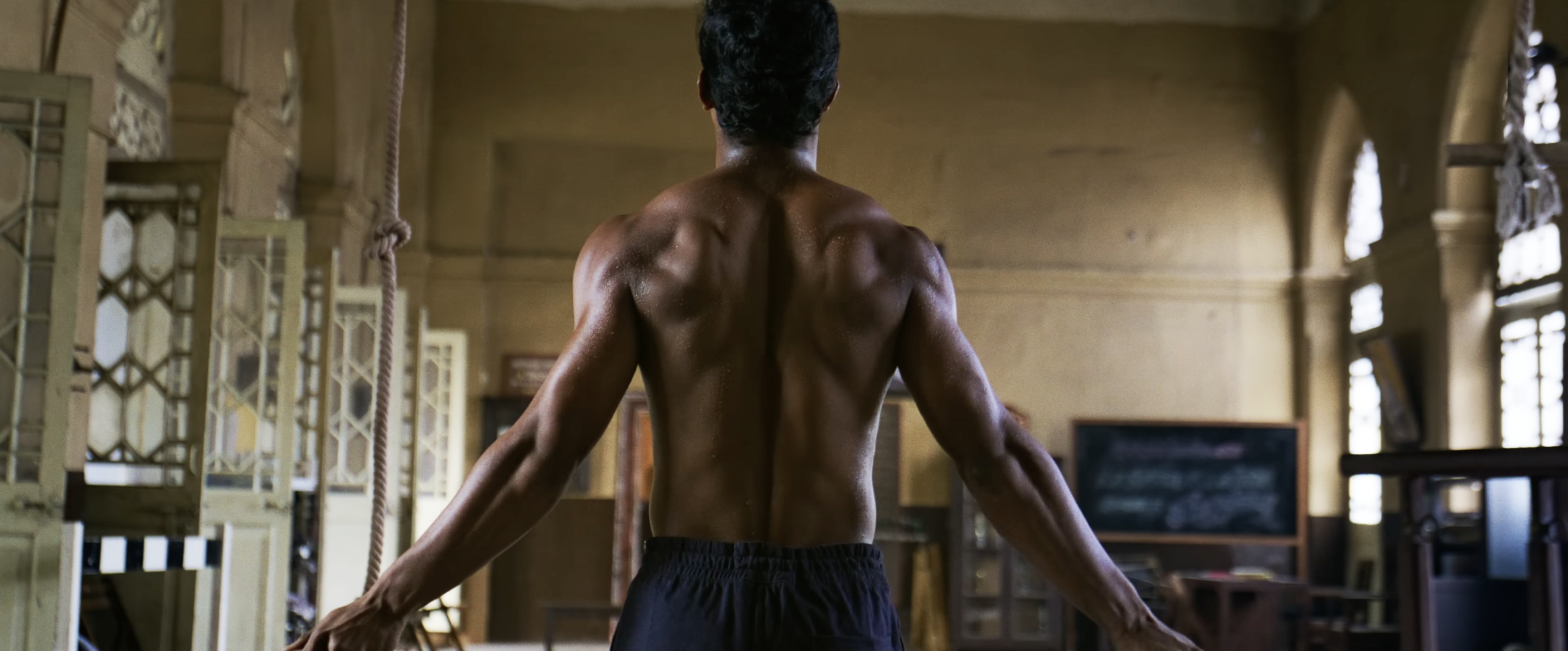
The Khashaba teaser, launched by Jio Studios and Aatpat Productions on 2 July, is not your typical trailer. It does not showcase the lead actor; his face remains hidden, stirring curiosity and speculation.
It steers clear of presenting the plot in predictable acts or culminating in a flashy moment or a catchy dialogue.
Instead, it creates an immersive atmosphere. You can feel the mud, sweat, and the sound of bodies hitting the ground, immersing you in a nation discovering its identity after independence.
It tells the story of a wrestler who accomplished everything without a coaching staff, funds, or support from those in power.
The teaser unfolds like a film’s opening montage, confident, atmospheric, and unhurried. It confidently conveys that the creators know the story they want to tell and won’t rush to explain it.
In a Bollywood landscape that often crams everything into the first thirty seconds, this thoughtful restraint is itself a powerful statement.
Your interpretation of the teaser rings true. There are no luxury settings, no stars making dramatic entrances to a booming score. Instead, it emphasises the grit of history. Whether this grounded approach leads to commercial success in a spectacle-driven market is one intriguing question surrounding Khashaba’s release.
What makes Khashaba’s real-world tale resonate, particularly among those who have witnessed India’s Olympic journey with mixed emotions, is not just his victory but the conditions in which he achieved it.
Khashaba was known for his agility, which set him apart from his contemporaries. His lean frame meant he couldn’t rely on brute strength, so he devoted himself to mastering techniques, especially a local move called Dhak, where a wrestler locks their opponent’s head and takes them down.
During the 1952 Helsinki Olympics, his matches had little rest time, leaving him fatigued.
Competing against well-funded international players without a professional coach, he faced uphill challenges. Yet, despite these obstacles, Jadhav triumphed.
But his success didn’t shield him from struggle. Jadhav joined the Maharashtra police in 1955, serving as a sub-inspector for 22 years, receiving a promotion only months before retirement.
The system that should have honoured him failed to do so, but the locals recognised his achievements and celebrated him with those 151 bullock carts.
This is the kind of story that cinema aims to elevate from obscurity, and it makes Khashaba feel special.
The creative team behind this film is noteworthy. Nagraj Manjule returns to direct after acclaimed works like Fandry, which won the National Award for Best Direction, and Sairat, a cultural phenomenon that made over ₹100 crore and was remade into Dhadak. His ability to tell stories rooted in the complexities of caste and class in Maharashtra makes him an ideal choice for this narrative.
The music is by Ajay-Atul, who created beloved scores for films like Sairat, marking a significant reunion.
The cast includes Jitendra Joshi, Mahesh Manjrekar, Girish Kulkarni, Vaibhav Mangale, Chhaya Kadam, and Gargee Kulkarni, while the lead actor’s identity remains under wraps. Keeping the actor’s face hidden in the teaser could be a brilliant marketing strategy or indicate that the makers are not yet ready to reveal the casting; either way, it has sparked discussion.
For audiences accustomed to seeing Indian sports through the lens of cricket’s dominance, the tale of an Olympic medallist who relied on public support to make his dreams come true and who returned not to government honours but to a people’s celebration is the kind of history that truly deserves attention.
Khashaba arrives in cinemas worldwide on 1 January, 2027.