


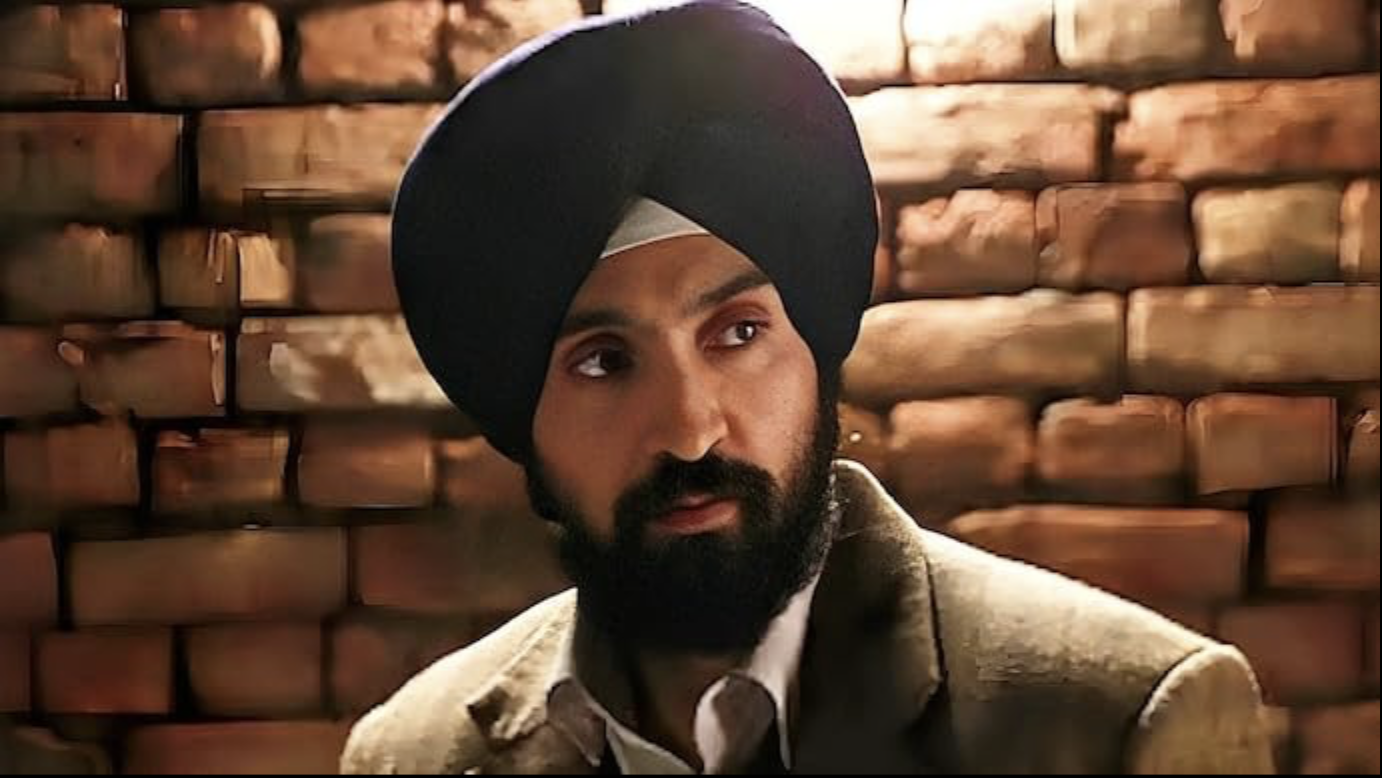
Diljit Dosanjh made a poignant statement on Instagram the day Satluj was removed from ZEE5 in India.
He wrote, “The same thing that happened to Satluj also happened to Shaheed Jaswant Singh Khalra.” With that single line, he drew a powerful connection between the film’s fate and the man it portrays.
Jaswant Singh Khalra disappeared in 1995 after being taken into police custody, and his body was later discovered near the Harike Bridge on the Sutlej River.
Several police officials were convicted of his abduction and murder, silencing his voice. Now, thirty years later, the film meant to amplify that voice faces a similar fate.
For British Sikh communities, the events of 1984 and their consequences are not just distant memories; they are deep, personal scars passed down through generations. This story transcends mere entertainment; it strikes at the very heart of a collective experience.
Directed by Honey Trehan and produced by Ronnie Screwvala’s RSVP and MacGuffin Pictures, Satluj features Diljit Dosanjh as Jaswant Singh Khalra, a Sikh human rights activist who served as a bank director during the turbulent years of Punjab’s militancy.
As people began to vanish under suspicious circumstances, Khalra took it upon himself to investigate. What he uncovered was shocking: evidence that the Punjab Police had illegally cremated around 25,000 unidentified bodies, mostly young men, without notifying their families. He documented critical cases, including the Behla killings and the secret cremations, and brought his findings to both national and international attention.
Tragically, in 1995, Khalra was abducted, allegedly tortured, and killed in police custody. His body was later found in the Sutlej River, the same river that lends its name to this film.
The cast also includes Arjun Rampal, Kanwaljit Singh, Suvinder Vicky, and Geetika Vidya Ohlyan. Trehan is known for his previous work on the acclaimed Netflix thriller Raat Akeli Hai.
The road to releasing Satluj is remarkable in its own right, highlighting the challenges that filmmakers face when tackling politically sensitive topics.
Originally titled Ghallughara, a term referring to the massacres of Sikhs in 1746, 1762, and 1984, the project hit a snag when RSVP applied for certification from India’s Central Board of Film Certification in late 2022.
After a lengthy six-month review, the board requested 21 cuts and demanded a title change.
This led RSVP to appeal in the Bombay High Court. By the end of the legal battle, the certification body recommended almost 100 cuts, according to some reports, as many as 127.
Rather than comply, the filmmakers decided to change the title again, from Punjab ’95 to Satluj, and released the film uncut on ZEE5 on 3 July, 2026, without any promotional campaign.
This stealthy release was intentional. Diljit Dosanjh shared his thoughts on Instagram after the release: “Our film has finally been released on ZEE5.
Unfortunately, we couldn’t keep the original title, Punjab ’95, for certain reasons, but there are absolutely no cuts in the film.
The version I watched in theatres two years ago is the same one I watched at home last week. If even a single cut had been made, I would not have promoted the film.”
In a candid moment during a live session with fans following the release, Dosanjh expressed his concerns: “Today is Saturday. I feel it could be taken down by Monday. But no worries, you download it.” He wasn’t far off. Just a day later, it happened.
On the evening of Sunday, 5 July, less than 48 hours after its debut, ZEE5 announced on its official Instagram account that Satluj would be removed from the Indian market.
“In light of the current developments, Satluj will be unavailable in India until further notice,” the post read. “Satluj may have paused. But the conversation it started hasn’t.”
ZEE5 did not elaborate on the “current developments“ that triggered the decision. They confirmed that the film remains available on ZEE5 Global for viewers outside India, so UK audiences can still watch it.
The Ministry of Information and Broadcasting provided its perspective, stating to ANI, “Satluj did not have the required certification for a theatrical release. Instead of complying with the certification process, the makers changed the film’s title and released it on an OTT platform.“
They also alleged that the release violated the Information Technology Rules of 2021, though they did not specify which provision was breached and confirmed that no request for reconsideration from the filmmakers had been submitted before the release.
In response to the removal, Director Honey Trehan said, “I found out about the removal of Satluj from ZEE5 in India around 8:15 pm on Sunday. I am at a loss right now. I don’t know how to react to this development.”
The film’s removal sparked immediate, widespread reactions from viewers and industry professionals alike, highlighting the broader implications of censorship and the ongoing struggle for justice and representation.
The decision to remove the film ignited immediate backlash from politicians, artists, and members of the Sikh community both in India and abroad.
Indian National Congress MLA Pargat Singh voiced his opinion clearly: “I do not believe banning the film was the right solution.
Whatever happened in the past, whether involving the police or civilians, it is widely believed that state force was misused. A film like this reflects on such issues and brings an opportunity for reform. In my view, it should be screened, not banned.”
The Delhi Sikh Gurdwara Management Committee condemned the removal, describing it as an attempt to suppress the story of Jaswant Singh Khalra.
They announced public screenings and educational seminars to ensure the film continued to reach audiences. DSGMC President Harmeet Singh Kalka highlighted the importance of the film’s story: “Suppressing this narrative and preventing the events of that dark era from reaching the public is deeply wrong, and it has sparked immense outrage across the Sikh community.”
Punjab Minister Harpal Singh Cheema added, “A film depicting atrocities should not be banned.“ Comedian Kunal Kamra also took to social media to challenge the Central Board of Film Certification, stating, “The public deserves to know why.”
In his live session following the film’s removal, Diljit Dosanjh explained, “The more you try to stop this, the more people will talk about it.
We’ve been fighting for four years. But I’m content that the movie is finally out. Now, every home is talking about Jaswant Singh Khalra ji.”
He also celebrated that the film had been screened at a Gurdwara Sahib, demonstrating that the community had found ways to share the story despite the obstacles.
For British audiences, Satluj remains available on ZEE5 Global. The vital conversation that Jaswant Singh Khalra began in 1995 and that this film aims to continue is far from over.