


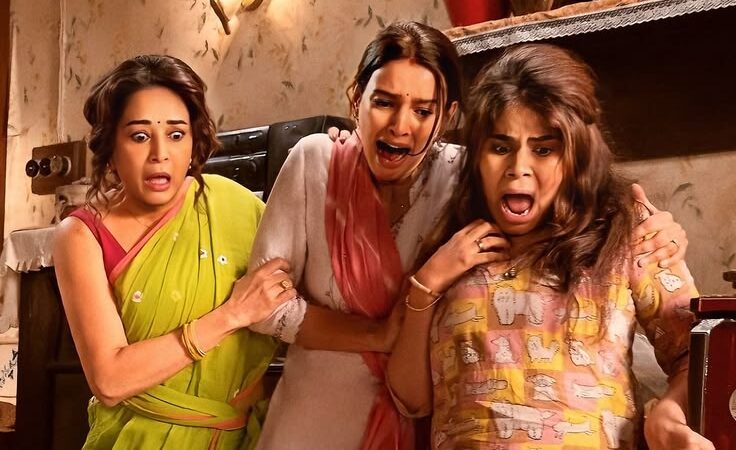
Cast: Madhuri Dixit, Triptii Dimri, Dharna Durga, Ravi Kishan
Director: Suresh Triveni
Platform: Netflix
Rating: 2.5/5 (A decent weekend watch)
The narrative kicks off when Rekha (Madhuri Dixit), an independent and unapologetic middle-aged widow, makes a frantic middle-of-the-night call to her two daughters. The crisis was her neighbour’s dead body in her kitchen. The deceased is Charitra Kumar Gupta (Ravi Kishan). Rekha claims she killed him in self-defence, weaving an incredibly elaborate, almost far-fetched sequence of events. Her daughters, after a bit of quarrelling, rush to her aid: Jaya (Triptii Dimri), who is suffocating under the pressure of an entitled husband in a deeply patriarchal household, and Sushma (Dharna Durga), a chaotic, attention-seeking social media influencer. Though highly sceptical of their mother’s wild story, they realise they must protect her. The film revolves around the logistical and emotional nightmare of dealing with the body while dodging a nosy neighbourhood, unfolding through a series of dark-comedy twists.
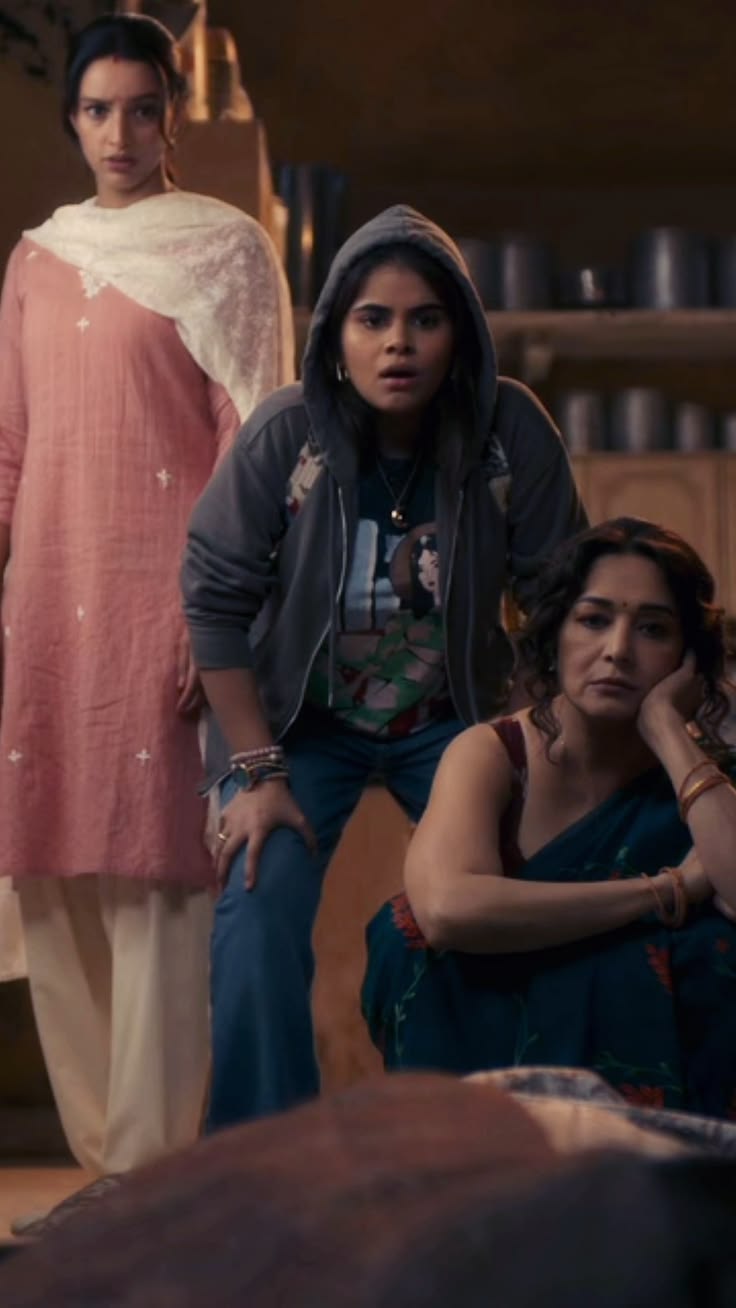
The Pros:
Visually, director Suresh Triveni, known for Jalsa and Tumhari Sulu, delivers a clean, deceptively simple cinematic experience. His clever use of wide shots from outside the house was pretty effective in turning the audience into nosy neighbours; a cinematographic choice that beautifully mirrors the narrative’s tension. The chosen cast delivers powerhouse performances: Madhuri Dixit, with high energy, commands the screen, effortlessly stealing every scene she is in. Triptii Dimri turns in a solid performance, though she is noticed struggling to match Madhuri’s formidable energy.
Dharna Durga shines by leaning into a classic, not caring about anyone else, Gen-Z persona that fits entirely naturally.
Ravi Kishan, Geetanjali Kulkarni, Arunoday Singh, and a cameo by Paresh Rawal provide excellent support, fitting perfectly into this eccentric world. What Maa Behen does exceptionally well is examine how society views single women living on their own. The film masks systemic feminine struggle and the oppressive male gaze beneath a layer of dark humour, cleverly leading the audience to initially misjudge the three female leads. As the chaos unfolds, their hidden traumas are exposed.
The writing introduces compelling grey characters to ground the bizarre situation in reality. Maheshwari (Arunoday Singh), who harbours a quiet, respectful affection for Jaya, offers a refreshing contrast to her husband by dismissing the community’s wild allegations against the family. Similarly, Goldie Sharma (Rrama Sharma), the daughter of Gupta Ji and the hostile Mrs Gupta (Geetanjali Kulkarni) remains friendly with Sushma despite a childhood feud and her mother’s strict warnings. Goldie is eventually revealed to be a victim of domestic suppression herself, introduced through a genuinely fascinating narrative turn. Unfortunately, this is where the film’s shortcomings begin to surface.
The Cons:
Ultimately, the Maa Behen story feels incomplete. The writers attempt to sustain a dark comedy tone until the final act, expecting the underlying systemic issues to erupt through its late-game twists. However, the film fails to foster enough emotional empathy for the characters to make that eruption land.
While the non-linear storytelling approach effectively peels back the layers of mental harassment these women endure, Triveni loses the audience somewhere during the buildup to the climax. Goldie and Maheshwari are engaging on screen, but their arcs are abandoned, leaving a string of unanswered questions.Despite a stellar cast capable of deep emotional heavy-lifting, the script fails to maximise their potential. Several scenes are meticulously set up early on, only to be completely forgotten:
The Opening Scene: Jaya’s introduction at a fertility clinic is never built upon, and contributes absolutely nothing to her character arc. The Wasted Cameo: Paresh Rawal’s character is built up as a monumental figure in Rekha’s life, yet his presence feels entirely redundant by the credits.
By ignoring the secondary characters, the film loses its grip on the viewer’s investment. This clutter of loose ends points to either lazy scripting or an over-correction to keep the focus strictly on the three central women. While a tight focus on female solidarity is a great storytelling concept, the execution here causes the audience’s interest to fade by the finish line.
Conclusion
Overall, it’s a good watch. The script feels lazy, but the cinematography and acting do a good job of covering it. It balances a heavy, thematic narrative with light-hearted, satirical storytelling, making it a fun weekend watch. Though not something to cancel your plans for. If you enjoy this premise but want something that feels more cohesive and fully realised, the film Badnaam Gali is highly recommended.
Verdict: Worth a watch once, some good performances, but could have been utilised better and elevated the film.