The referendum debate heats up

mr money bags business cartoon (2)Our columnist Mr Money Bags, who has decades of experience in Finance, an MBA, an advanced diploma in Financial Planning and not to mention his super business skills, is here to give you, our lovely readers some valuable tips and advice on money business matters. He is forthright and can sometimes be stern when it comes to your cash, but when it comes to finance he really is the expert. Read on for your business and finance advice…

I guess the referendum should not be linked to business in isolation, but the government has actually made it so; therefore, I thought I will share some things that have come up in the media in the last two days.

At the moment, I am abroad and the hot topic for UK travellers is what’s going to happen next week. I have been keeping an eye on the papers, and I have also been undertaking my own research. I guess I am being a geek, but its part of my job as a Chartered adviser to be able to answer client enquires and not look dumb struck.

One of the first things I want to focus on is that nobody knows what is going to happen. I want to compare the referendum as the UK going into business in a new territory. Let’s think of it this way if you are new to business you are more likely to fail, but if you have an existing business and you change strategy the chances of failure are far less, and even if there is failure the impact is far less.

If you talk to business people, and especially change management consultants, they will tell you that change is constant, and sometimes it is needed. However, in the case of the referendum this will be a big change regardless of the whether we remain or leave. The U.K. is an established country, the fifth largest economy by some reports and as far as I can see we are independent; hence even if we do leave I do not foresee major issues because we are embedded within The EU, and changes will take many years to take us completely out of the EU.

The second thing I want to focus on is scaremongering by the government by throwing umpteen statistics at us the general public.

I am taking a punt on the EU referendum, and by this I mean that I have cashed in all my pension and investment funds. This is because I personally believe no matter if we vote in or out the markets are going to fall for a short time only. I therefore sold my stocks, when the price was at its highest in April and have been sitting on cash funds till the markets dip as low as I think they will go and then buy low.

The reason I did the above is because when you buy low, you get more units for your money, and when the markets grow guess what I have made a return. I am guessing I will return circa 10% or more on my money.

I read that the in campaign is saying £100 billion has left the stock market, well yes it would have done so. This is because investors hedge the market. This means they take a risk on some of the money, and speculate just like I am doing so. This does not mean the money has left the UK, but instead is most likely sat in cash.

Last week in the press there was talk of tax rises, quoting our chancellor “Far from freeing up money to spend on public services as the leave campaign would like you to believe, quitting the EU would mean less money,” Osborne said. “Billions less. It’s a lose-lose situation for British families and we shouldn’t risk it.”

Osbourne said he would have to:

Implement £15bn of tax rises, a 2p rise in the basic rate of income tax to 22%, a 3p rise in the higher rate to 43% plus a 5% rise in the inheritance tax rate to 45p

Increase in alcohol and petrol duties by 5%

Cause Spending cuts worth £15bn, including a 2% reduction for health, defence and education, equivalent to £2.5bn, £1.2bn, £1.15bn a year respectively

Make Larger cuts of 5% from policing, transport and local government budgets.

The above might happen, and it’s a big might. I say this because who knows what will happen, and because I personally do not believe such drastic action would be needed if we left the EU. This is because trade will still continue, we will all still be working, and still paying taxes. My personal view is things will stay as they are in the short term, and yes we might have to make changes but these changes could take upwards of ten years before they are implemented.

When the UK joined the EU it took time to implement changes anyhow, and I guess we took a risk. Also even if we leave, a fair amount of our laws are embedded from EU legislation; therefore, we still will use the same laws.

The other thing I wanted to say was the UK did not join the euro. Was this a good decision or a bad decision? Looking back whatever your thoughts are I think this was a bold move by the UK and one I do not think is regrettable.

Overall, I think Britain for once is finally on the map, and the whole of Europe is looking at us. I would encourage you all to read forums, look at the Internet and look at both arguments to stay in Europe and arguments to leave.

If we do vote to stay are things going to stay the same, or is Europe not going to take us seriously, and the annual farce of Mr Cameron trying to negotiate a better deal, which in my view never happens will this get us better rights etc?

If we leave will this force the EU to collapse, as we are one of the biggest countries within the EU? If the UK does leave, will it lead to other countries following us out?

Whichever way you vote I would encourage you all to take the vote seriously by undertaking your own research.

I leave you all with some words of thought from Margaret Thatcher relating to Europe, “It is frequently said to be unthinkable that Britain should leave the European Union. But the avoidance of thought about this is a poor substitute for judgement,” I guess this comment sums it up. We have to think, and make a sound informed decision about which way we are going to vote.

EU Referendum – What do you make of it?

mr money bags business cartoon (2)

Our columnist Mr Money Bags, who has decades of experience in Finance, an MBA, an advanced diploma in Financial Planning and not to mention his super business skills, is here to give you, our lovely readers some valuable tips and advice on money business matters. He is forthright and can sometimes be stern when it comes to your cash, but when it comes to finance he really is the expert. Read on for your business and finance advice…

This is perhaps one of the most difficult articles I’ve had to write. This is because I do not want to bias our readers, or aim to influence you in any way. However our future in the EU is an important issue, which merits writing about and actually telling you, our readers, what I think of the issue.

So let’s get started, the first point I want to stress is that I am still undecided on which way to vote. My initial thoughts were to vote leave, but I feel that there is insufficient information available in the general media as well as from the government to make a real informed decision.

The government, which is mostly pushing for a vote to remain, and the Brexit campaigners alike are letting the public down, as there is hardly any information available other than scare mongering. This is making it difficult to choose how to exercise our rights on one of the most important votes in our lifetime.

So let’s start with the side in favour of remaining in the EU. The government has in the last few weeks come up with many various statistics. Looking back at government forecasts in the last few years, they have generally been over optimistic when talking about the economy, and very low when talking about issues such as immigration etc.

Some Pro-EU Claims include:

British households are £3,000 ($4,300) a year better off thanks to the U.K.’s EU membership. I am not sure how this is exactly quantified, however it comes from a Confederation of British Industry (CBI) study published in 2013.

Some three million jobs depend on Britain’s membership of the EU. A statement used often by government, but plenty in the business world disagree with this. International company Unilever has said its 7,500 workforce would be unaffected by an exit from Europe.

The EU buys over 50 per cent of UK exports – is this really going to change? Let’s get realistic, will companies such as Mercedes, BMW stop buying UK goods to be used in their cars – the answer is probably a no.

1.4 million British people live abroad in the EU. I actually think this is a valid concern, what will happen to this people with properties in Spain, France, etc.? I think ownership will not be affected, but in essence there could be issues when selling such as tax. Overall the world is a much smaller place than it once was, and many people transact and own properties worldwide. It will be interesting to see what happens here if we were to leave.

Equal pay and non-discrimination are some examples of positive steps taken by the EU to make living in Europe easier and fairer. I do not think the government would take away such legislation which is now embedded in constitution, but we might lose out in the UK on future legislation in the EU which is positive and brings about positive change in society.

Some Pro-Brexit arguments include:

Britain would win much greater control over its borders by leaving the EU. Is this really going to happen? The issue is we should be doing something about borders now, not waiting for a Brexit to do so. Yes we could say those from Eastern Europe will have to get a visa, but then so will British people looking to work abroad.

A Brexit will allow us to ‘Make Britain great again’. I think we would be forced to start thinking more seriously about our economic situation, and  I agree with what billionaire founder of Hargreaves Lansdown said, which is that a Brexit “would be the biggest stimulus to get our butts in gear,”

No to super nationalism – a very strong argument to leave the EU, because we the British like our democracy and the sovereignty of the U.K, and by leaving it is said we will effectively be in control of our own sovereignty.

Overall, as stated above I am currently undecided. I am watching the debates on television and looking to do my own reading around the subject. I guess my personal view is that even if we do end up leaving, we will still have close ties with Europe. I do not think a Brexit will mean an end to our relationship with Europe because we are too close, and at present too important a member of the European Union.

TaxPayers’ Alliance calls for Government to abandon ‘Sugar Tax’

The TaxPayers’ Alliance (TPA), Britain’s grassroots campaigning group dedicated to reforming taxes, has renewed its call for the Government to abandon its proposed Sugar Tax, as its new research reveals that it has little to do with the sugar content of the products it affects.

They have carried out a comparison of 49 drinks in three different groups: regular fizzy drinks as well as sports and energy drinks, and milk-based products (including coffees). The first group will be taxed, while the second and third groups will not.

Giving examples in the research, TPA said Coca-Cola (containing 10.6 grams of sugar per 100 millilitres) will be subject to Sugar Tax, but a Starbucks’ Signature hot chocolate with whipped cream and coconut milk (containing 11 grams of sugar per 100 millilitres) will not.

“Furthermore, energy drinks such as Monster Ori.gin (containing 11 grams of sugar per 100 millilitres) will be taxed, but Tesco chocolate flavoured milk (12.4 grams of sugar per 100 millilitres) will not. None of the 10 most sugary products analysed will be subject to Sugar Tax,” TPA’s spokesperson added.

TPA observed that, added to the mounting evidence that this tax will merely increase the cost of living for poorer families, the government should abandon this pernicious tax immediately.

Jonathan Isaby, Chief Executive of the TaxPayers’ Alliance, commented that it was deeply concerning that the government has given in to the pressures from the public health lobby and is pushing ahead with this regressive tax, which will hit the poorest families hardest.

“Evidence shows that the Sugar Tax has nothing to do with the sugar content of products, so it is farcical to suggest that this will have any positive impact on people’s diet or lifestyle choices” he added.

He observed that this is yet another example of irresponsible meddling from the ‘High Priests of the Nanny State’, introducing entirely unnecessary complications into an already complicated tax system and pushing up the cost of everyday products for hard-pressed families.

TPA recalled that announced in the 2016 budget, the soft drinks industry levy (the ‘sugar tax’), will be paid by producers and importers of “water-based added sugar soft drinks” from April 2018. It is expected that the levy will have two rates (18 pence and 24 pence) dependent on the drink’s sugar content per litre. However, the government assume that all costs of the tax will be passed on to consumers.

Another one bites the dust, as BHS to close down at a cost of 11,000 jobs

0

BY Itrat Bashir

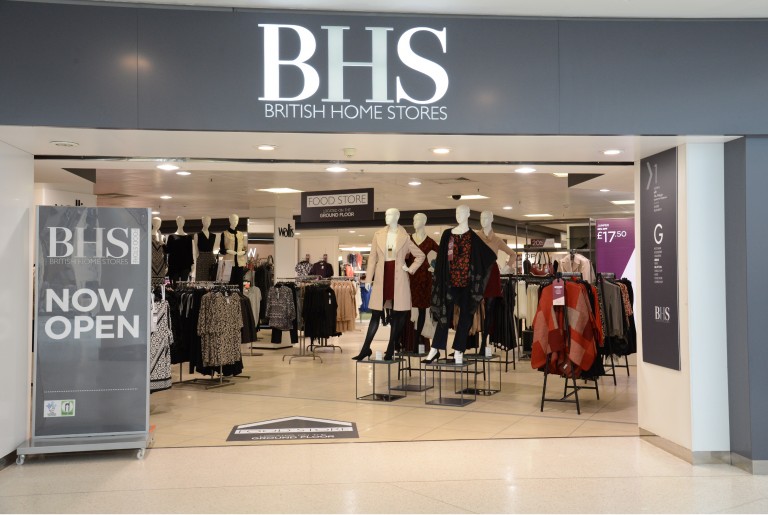
British Home Store (BHS), a face of the British retail sector for almost 90 years, will vanish from our high streets at the cost of 11,000 jobs, after its administrators failed to find a buyer for the departmental store.

The UK’s leading retail store, with 164 branches across the UK, had filed for administration almost a month ago after it failed to secure finances to overcome the losses. The stores’ debt stood around £1.3 billion, which include a pensions deficit of £571 million. In 2000, the BHS was bought by billionaire Sir Philip Green for £200 million, which he later sold it for just £1.

Philip Duffy and Benjamin Wiles, Managing Directors of Duff & Phelps (the Administrators) have announced the orderly wind down of the BHS business.

“Despite the considerable efforts of the Administrators and BHS senior Management it has not been possible to agree a sale of the business. Although multiple offers were received, none were able to complete a deal due the working capital required to secure the future of the company,” said Duff & Phelps’s spokesman.

According to him, as a result of the wind down all 163 stores will be in close down sale mode over the coming weeks and whilst continuing efforts will be made by the administrators to sell stores, the jobs of 8000 members of staff are likely to go. A further 3000 jobs of non BHS employees who work in the store’s concessions may also be at risk.

Philip Duffy, Managing Director of Duff & Phelps and Joint Administrator, said, “The British high street is changing and in these turbulent times for retailers, BHS has fallen as another victim of the seismic shifts we are seeing. The tireless work and goodwill of the existing management team and employees of BHS with the support of my team were not enough to change the fortunes of the company.”

In response to the news regarding BHS, Business Minister Anna Soubry said that the announcement that the administrators have been unable to find a buyer for the business will be devastating news for all those who work at BHS and those in the supply chain. “The government stands ready to support workers to find new jobs as quickly as possible,” she added.

The Business Secretary has already announced an accelerated Insolvency Service investigation into the activity of former BHS directors. Any issues of misconduct will be taken extremely seriously, said the Minister’s spokesperson.

Asian restaurant owners urged to ‘not buy cheap’ by leading TV chef

Owners of nearly 1,000 Asian restaurants in the UK have been urged not to buy cheap, and to up their game in terms of health, hygiene, nutrition and quality if they want to survive in today’s competitive environment with changing consumer tastes.

The ‘Nutrition and Hygiene’ road shows were hosted in Bristol and Edinburgh, by the Asian Catering Federation’s (ACF) in association with JUST EAT, the UK’s number 1 takeaway ordering service.

Renowned chef Cyrus Todiwala, addressing an audience in Bristol, stressed the need to produce healthier dishes, demanded by today’s diners. He focused on the importance of using quality, wholesome produce; abandoning the use of harmful food colourings and corn oil, and lowering the amounts salt and sugar used in recipes. Todiwala’s restaurants now serve unpolished rice, in preference to pilau because of its lower carbohydrate index and glycemic index rating.

Cyrus warned of
Cyrus warned of the temptation to compete on price alone

The co star of BBC TV’s ‘Incredible Spice Men’, urged the industry “Don’t buy cheap!”, and to move away from the temptation of competing on price and raise standards instead. Cyrus assured guests that the British public will pay more for better quality.

In his keynote speech, Just Eat UK MD Graham Corfield, gave an enlightened insight into the takeaway industry, which is now worth some £9 billion to the UK economy and supports over 220,000 jobs. Sharing details on local online consumer habits, popular cuisine and dish choices, Graham showed that the demand for healthier choices had grown by 64% in the UK with a rise in sales of Tandoori Chicken.

Speaking ahead of Gluten Awareness Week (9th – 15th May), nutritionist Ruth Tongue MSc said that there is a sharp trend toward low carb – high protein foods, with 3.8m people in the UK describing themselves as ‘part vegetarian’. 22% of the public claim to have a food allergy or intolerance. Gluten free diets are becoming mainstream, with 15% of the population already avoiding food with gluten. 67% of customers say they now want to see calories on menus, with half choosing a restaurant displaying nutritional information, in preference to one that does not. Ruth said the most commonly mentioned terms by trend-setting food bloggers are, ‘vegan’, ‘paleo’, ‘kale’ and ‘avocado’.

Although traditional Indian diets are low in fat, high in fibre and rich in fruit and vegetables, too many takeaway meals in the UK are unhealthy. Ruth, advised restaurants to promote healthier alternatives and make subtle changes to their menus.

The event also featured live entertainment

Hygiene experts Ashvini Pancholi-Dhillon and Amanda Catling from National Sanitation Foundation (NSF) explained how to maximise ‘Scores on the Doors’ when environmental health officers carry out hygiene inspections. Despite having a perfectly spotless premises, with excellent food safety practices, establishments can score as low as 1 out of 5 (the lowest is 0), if their record keeping and paperwork are not kept in order.

Although at the moment it is only compulsory to display ‘Scores on the Doors’ ratings in Wales, the industry widely expects the requirement to be extended to the rest of the UK around the end of the year.

Attendees were left in no doubt that with growing numbers of diners checking hygiene ratings on their smart phones on the Food Standards Agency site www.food.gov.uk, before using restaurants and takeaways, it is essential for owners to maximise their score. Low scoring venues will lose business to higher rated competitors.

REGIONAL NEWS: Regeneration Boost for Bradford’s Economy

Small businesses and start-ups in parts of Manningham, Great Horton and City wards could benefit from a proposed new Community Led Local Development (CLLD) regeneration programme starting in 2017.

CLLD is a new initiative under the European Structural and Investment Funds (ESIF) programme for 2017 to 2022. Up to £6 million could be secured to provide support for new and existing businesses to grow their ventures and help local people who are unemployed to find jobs and develop new skills.

Carlisle Business Centre is currently leading the bid to secure the funds. Carlisle Business Centre is a not for private profit organisation, driven by a workforce and voluntary board of directors dedicated to providing excellent services for local people.

Sam Keighley, CEO at Carlisle Business Centre said:

‘Carlisle Business Centre is delighted to be leading the charge to secure these resources. Communities living in Manningham, Great Horton, and City wards are some of the most enterprising in the country. It would be fantastic to secure support for people to realise their dreams, be that starting up or growing an existing business or gaining new skills to find employment. There’s lots of work to be done over the next few months to make the case for securing the money and we hope local people, businesses and other organisations will join with us to do this’

If you want to get involved, the centre wants to know what you think. If you have an opinion on what support is needed in the area to help businesses need to start up, sustain and grow, and what support is needed in the area to help local people gain new skills and secure jobs, be sure to get in touch with the Carlisle Business Centre to discuss further.

You can also volunteer to be a member of the Local Action Group that will oversee the development of the bid and, if successful, lead the 5 years of regeneration in the area.

For more details about how to get involved, please contact the Business Centre on 01274 223222  for more information.

UK Business to benefit as Enterprise Act made official

0

BY Itrat Bashir

The UK’s 5.4 million businesses are set to benefit as the Enterprise Bill received Royal Assent on May 4 and became the Enterprise Act.

The package of measures in the Act will help the government deliver on many of its commitments, from cutting red tape and tackling late payment to boosting the quality and quantity of apprenticeships, said an official spokesperson.

On the new Enterprise Act, Business Secretary Sajid Javid said this will help deliver the growth and security that benefits every single person in the country. “It is proof that this government is delivering on its commitment to back the business owners who are the real heroes of our economic recovery,” he added.

Under the new law, a Small Business Commissioner will be established to help small firms resolve issues such as late payment. Moreover, it will include the actions of regulators in the government’s £10 billion deregulation target and increase transparency through annual reporting requirements.

The government will extend the successful Primary Authority scheme to make it easier for businesses to access consistent, tailored and assured advice from local authorities, giving them greater confidence to invest and grow.

Through the law the government intends to protect and strengthen the apprenticeship brand, introduce targets for apprenticeships in public sector bodies in England, and establish an Institute for Apprenticeships, an independent, employer-led body that will make sure apprenticeships meet the needs of business.

Finally, the law will create a legal obligation for insurers to pay claims to businesses within a reasonable time.

Welcoming the new Act, Business Minister Anna Soubry said: “Together these measures will give a big boost to British enterprise. The Small Business Commissioner will help tackle the scandal of late payment, one of the leading issues for smaller firms. While the positive steps to reduce the burden of regulation and give more young people the opportunity to do an apprenticeship will benefit millions of businesses across the country.”

Additional measures under the Enterprise Act will reform the business rates appeals system; enhance shop workers’ rights to opt out of working on Sundays; pave the way for bringing private capital in to the Green Investment Bank; amend the Small Business Enterprise and Employment Act relating to the Pubs Code and adjudicator; put a cap of £95,000 on exit payments in the public sector; allow the government to fund UK Government Investments Limited; and update the Industrial Development Act to help support the roll-out of telecommunications and broadband.


18 year olds are not considered financially responsible, according to new research

0

Would you trust your teenager with a large sum of money? New research by YouGov, commissioned by wealth management company Brewin Dolphin indicates that most adults in the South East do not trust 18-year-olds to inherit or handle significant sums of money and feel the early and mid-twenties is a more financially responsible age group.

Legally, once a child turns 18 he or she can access the money in a junior ISA (JISA) – as set up on their behalf by parents and grandparents – and spend it how they please. However, over two out of five adults (42%) in London and the South East believe 18 is too young for children to be given control of such savings plans, according to the survey, in line with the national average of 43%.

When asked about what age a child is responsible enough to inherit £100,000 or more, only 7% of adults in the SE and London felt that those aged 18-21 are old enough, with under a quarter (23%) thinking 22-25 year olds are mature enough to take on the responsibility. 28% felt 26-30 year olds were responsible enough, while a further 29% felt that people need to be older than 30.

Financial responsibility_South East and London

The majority of respondents in this region also felt that restrictions should be placed on children inheriting wealth – only one in 10 (9%) people felt that no restrictions are needed – with just over a quarter (26%) of people saying that children should be at least 25 to inherit without restriction.

Commenting on the findings, Rob Burgeman, Divisional Director of Investment Management at Brewin Dolphin, said: “While there is a commitment by parents and grandparents to ensure that their children and grandchildren have the best financial start to adult life, they do not want to see their money wasted or become the cause for financial recklessness and frivolity. Some would rather wait until the recipients of their wealth have reached an age of financial maturity, so that the money is spent in a way that reflects the spirit in which it was given.”

Despite this, 41% of Britons in the SE and London say parents should help with paying their children’s university costs. Surprisingly, there is a huge divide in this area across the regions – almost half of Londoners (46%) agree that parents should help pay for university, compared with just 16% and 17% in the North East and East Midlands respectively. Help towards a deposit for a new home also tops the list of ways in which Britons in the SE and London think parents should financially support their children, with 39% of adults citing this. In addition, 29% said that parents should pay their children’s wedding costs.

When it comes to financial education, the overwhelming majority (91%) of adults in this region agree that it is the job of parents to teach their children about responsible money management. 85% of adults also agree that pocket money is a good way to start teaching children to appreciate money and instil a sense of financial independence.

Does your property breach the inheritance tax threshold?

0

mr money bags business cartoon (2)Our columnist Mr Money Bags, who has decades of experience in Finance, an MBA, an advanced diploma in Financial Planning and not to mention his super business skills, is here to give you, our lovely readers some valuable tips and advice on money business matters. He is forthright and can sometimes be stern when it comes to your cash, but when it comes to finance he really is the expert. Read on for your business and finance advice…

Property price rises over the last decade or so have led to 25% of all properties selling for more than £325,000 in 2015. This is the threshold where after this figure all your assets are taxed at 40% after death. Inheritance tax has stayed the same over the last 7 years, whilst prices due to various factors including inflation have increased.

The treasury collected £2.69 billion in inheritance tax in 2010, and most recent statistics show this figure as £4.56 billion in the 2015 tax year. Insurance company Saga recently discovered that just one in ten people over the age of 50 know that the inheritance tax threshold is £325,000 for a single person. This is worrying as it clearly shows many people are not planning to save tax for their families, and are unaware of the implications of what happens when someone passes away to their estate.

If a person passes away the government want any tax calculated circa 6 months after the date of death. Some of the tax may need to be paid before grand of probate is granted. This means your family might have to find funds to pay tax before the property can be sold.

Is there any good news coming, or is it all doom and gloom for many more families in the future? The government has made some changes to try and reduce the tax burden on hard working individuals who are passing on their wealth; however please be aware the changes may not apply to all individuals.

At present, if someone is married or in a civil partnership, all assets passed to the surviving person on death will fall under an inheritance tax band of £650,000 for the surviving spouse. In the last budget the government announced upcoming changes to lift family homes worth up-to a million out of tax.

This will not be immediate, as a new tax allowance will start in 2017, which will rise as follows: £100,000 in 2017 and slowly increasing to £175,000 by 2021. It will then rise with inflation. However those with estate worth £2 million plus will have the additional allowances reduced for £1 for every £2 of their estate over £2 million.

The tax allowance above will only apply to one residence property; therefore if you have a few properties they will not benefit from the allowance. The property also needs to be passed to your direct descendants to qualify for the tax allowance.

This leaves a slightly bad taste in my mouth, as what about those people who choose not to have children, or unfortunately cannot have kids? In my view these people are put at a disadvantage, as they will not benefit from the new tax allowance if they want to leave funds or property to other people.

There is something I wanted to say at this stage, which is that if you are worried about your own tax circumstances then please get some help. There are plenty of websites that will give you more information, but in the likelihood you feel you might have a tax liability, there are many professionals out there who can help you understand and tackle it head on.

I find that there are two distinct types of clients I meet: those that do not care about tax, and those that are genuinely worried about it. If it worries you, don’t be afraid to get some advice.

Garuda Indonesia signs deal worth almost £1 billion to UK manufacturing

0

BY Itrat Bashir

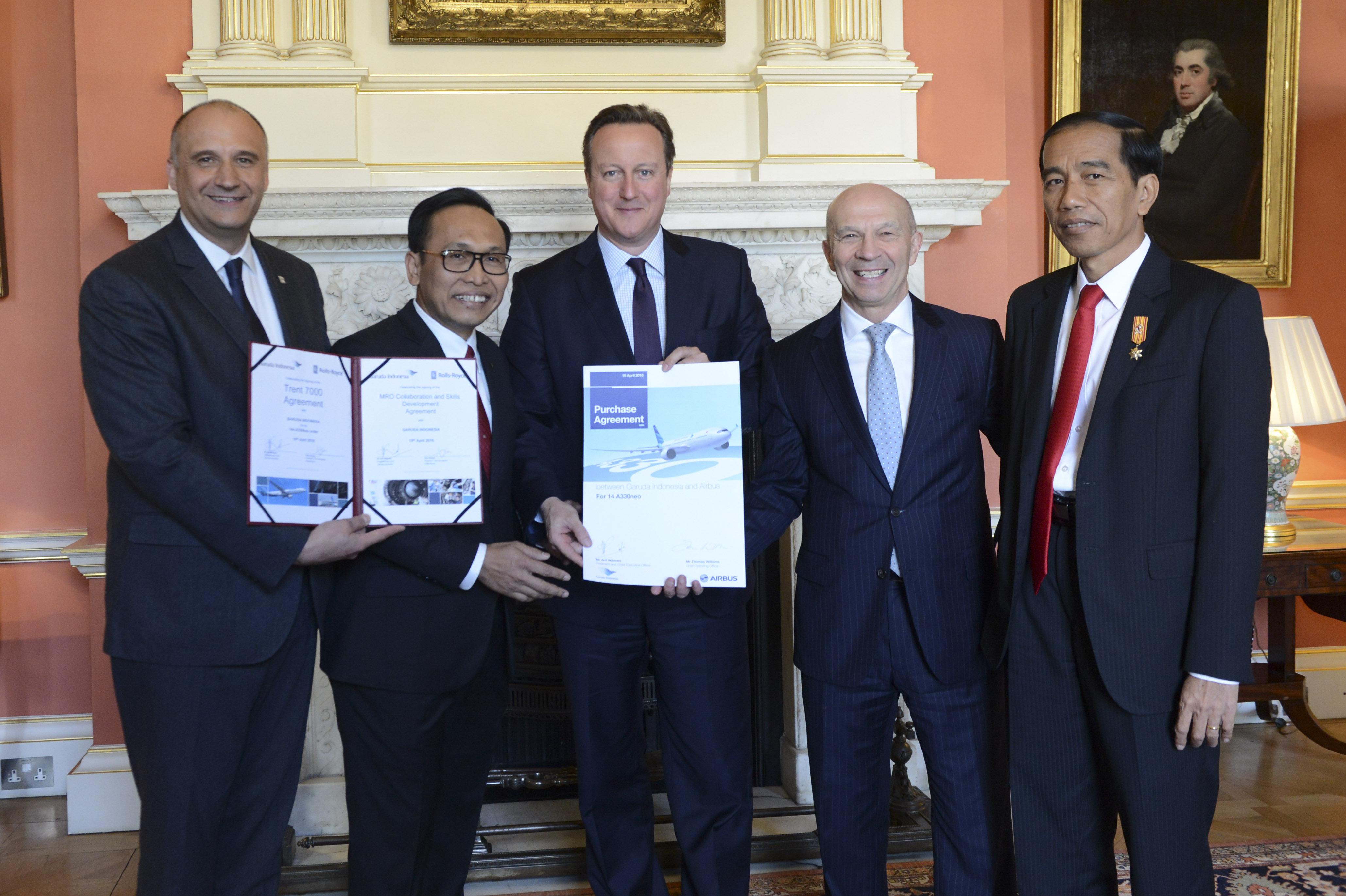
Garuda Indonesia, Indonesia’s national carrier, has signed agreements with Airbus and Rolls-Royce for a £4 billion deal to upgrade the airline’s 14 A330s to the newer A330neo.

The deal was signed on the first day of a two-day visit to the UK by Indonesian President Jokowi, who met Prime Minister David Cameron on Tuesday 19th April to discuss the strengthening of economic and security ties between the two nations. Through this agreement, the UK manufacturing received a boost worth nearly £1 billion.

“The deal will secure jobs at Airbus facilities in Filton, near Bristol, and Broughton, in North Wales, as well as the extended supply chain across the UK. Rolls-Royce has signed an agreement for the provision and aftercare of Rolls-Royce engines,” said a government’s spokesperson.

In a statement, Prime Minister David Cameron said that this deal underlines the increasing importance of our ties with Indonesia, a fast growing economy and set to become the seventh largest in the world by 2030. “We are the fifth biggest investor in Indonesia and our relationship has more untapped potential. We want to encourage more British businesses to seize on these opportunities and we will continue to support them by banging the drum for British skills and expertise.

Airbus Chief Operating Officer Tom Williams said that they are delighted to welcome Garuda Indonesia as a new customer for the A330neo. He also said the A330neo will bring a range of benefits from unbeatable operating economics, including significant reductions in fuel consumption, lower maintenan

David Cameron welcomes President Jokowi of Indonesia to Downing Street
Prime Minister David Cameron welcomes President Jokowi of Indonesia to Downing Street

ce costs and extended range capability. “The aircraft will have Airbus’ all new Airspace cabin, which will ensure the A330 continues to be a benchmark for passengers and airlines alike,” he added.

Rolls-Royce President of Civil Aerospace Eric Schulz also welcomed the agreement by saying that Indonesia has great economic prospects and they are committed to supporting its future growth in air travel. “This year marks the 20th anniversary since we first provided Trent engines to Garuda Indonesia and we are proud to power this latest expansion to their fleet with the very latest member of our Trent engine family. In creating this family, we have benefitted from UK investment in innovation across materials, aerodynamics, noise, control systems and manufacturing technologies,” he added.

Meanwhile, during the meeting the two leaders also held discussions around an ambitious EU-Indonesia free trade agreement. “The Comprehensive Economic Partnership Agreement holds huge potential for both our countries, making it easier and cheaper for business to invest and trade. Experts estimate a deal could save £50 to £70 million per year for UK exporters,” the spokesperson added.

The Prime Minister had visited Indonesia twice over the past four years, most recently in July 2015. Last year bilateral trade between Indonesia and the UK increased by nearly four percent to £1.62 billion, but both governments agree there is vast potential to build on this. The Indonesian retail market nearly doubled in size between 2008 and 2014 and will be worth almost US $550 million by 2016. Marks and Spencer, Debenhams and Mothercare are already active in the country and the government wants to help others to join them, taking advantage of the support available from UK Trade and Investment and others.