North East Culture Workers Asked to Share Coronavirus Experiences

North East workers in the culture sector are being asked to contribute to a survey which will help employees during the coronavirus pandemic.

The survey, run by Newcastle City Council, asks employees and freelancers working in the sector to share support they have used throughout the pandemic. This includes any practical support and how local authorities have helped to support people.

The culture industry helps to employ thousands of people in the North East and more than 4000 freelancers were employed in the industry.

Newcastle City Council launched the survey to understand the impact of the virus on the industry and hope to plan further support for those in the culture sector.

Cllr Ged Bell, cabinet member for employment and culture, said: “Newcastle is a leading cultural destination and we are proud to be the home to a large and vibrant community of world-class creative professionals and venues.

“Right now times are exceptionally hard for both, and we are doing all we can to support them.

“We know that culture will play a key role in helping our city to recover from the effects of this pandemic, supporting economic development, public health, and quality of life, and we want to see an environment in which those individuals, businesses and organisations can again flourish.

“For that to happen we need to know precisely what is needed, so that we can tell the Government, and ask them to work with us to get the sector back on its feet.

“That includes providing ongoing Government financial support for venues that will both struggle to reopen due to social distancing then need time to rebuild audiences’ confidence in visiting, and support for creatives to produce the new films, shows and works which are the lifeblood of those places.

“We also want to enable cultural professionals to go back into schools and communities to stimulate creative activity across the city.”

Newcastle Council is running the survey alongside local organisations Newcastle Culture Compact, the North East Culture Partnership, the North of Tyne Combined Authority and Tyne and Wear Cultural Freelancers Network.

To fill in the survey visit:  https://bit.ly/2NqVERD

It’s Safe to Work We Go

0

By Raheema Khan

There may be only one thing trickier than managing to live under lockdown – and that
is returning to normal work routines, as the country must now do.

For the vast majority of independent retailers this subject will be of some professional interest. Having been open for the most part throughout the last few months, the shopkeepers of Britain have already become practiced in many different variations of operational safety at work – and in expertly regulating social distancing while hundreds of customers visit their stores every day.

In fact, about half of the country – the bus drivers and nurses, food and factory workers, garbage collectors and police, firefighters and postal workers – never ceased turning up at work regardless of the risks and dangers.

Likewise, they too are also well-qualified to help the rest of us back to work safely thanks to the systems they have devised and improvised since March.

All these people have already proved that working safely while the coronavirus is still around is perfectly possible.

But it is understandable how some people, such as the old or those with medical conditions, are terrified of going outside, while others – young, healthy – have little care for risks and are impatient to return to normal.

They will all have to work together – so how can we do it? How can we make those two perceptions of reality fit?

Top Travel Tips

The first thing to remember is that you have to be safe getting to work before

you can be a safe at work. Travelling is also the period when, unless you are in your own vehicle, you are most likely to be in a relatively crowded space.

To deal with the problem, Transport for London has suspended tapping in with Oyster cards on buses to limit surface contamination. Britain’s rail network meanwhile is putting in place comprehensive new measures to ensure social distancing and prevent crowding.

Train operators have introduced one-way systems at stations, floor markings, and extra security staff for crowd control. Some seats have been taped off and strict cleaning measures are in place.

Peter Hendy, Chairman of Network Rail, said most people were following social distancing rules. “Our passengers are reasonable and rational. I think people understand they don’t want to be too close to people,” he said.

The new measures we have all learned over the past months apply to daily travel:

  • Wear a mask if there are people around you within the two-metre social distance – highly likely on a bus or train
  • Leave a space between seats if you can. Rush hour can make this difficult, but employers are expected to be flexible in allowing employees to alter work hours to enable commuting out of “peak crush” times
  • Try not to touch any surfaces or your face when you are aboard any transportation, and apply hand sanitiser immediately when you disembark • Once at your place of work wash your hands really well
  • And if you can, carry on working at home for as long as it is practical

You are good to go!

Like you’ve never been gone

“It feels so good to be back in the office” is a sentence many people thought they would never speak, and yet more and more are now impatient to return to their regular routines.

At Tilda in Rainham, Essex, they never stopped milling rice through the entire pandemic period. Head of external Affairs, Jon Calland, explained how the company did it and gave valuable pointers for managing Britain’s mass return to work.

“We are operating with a skeleton staff, and we have been milling rice 24/7. There’s been a huge increase in demand – it was unprecedented,” he says.

“What happens now is that we have staggered shifts, and the way handover is done minimises contact. So, we will make sure that in the canteen that not everybody is eating at the same time – that can’t happen anymore. The employees can all see that things are being done for their benefit.”

As well as procedural measures, Tilda has deployed some excellent technical ones: “We have temperature control,” says Jon. “If you come on site and you are running a temperature, you can’t come in. Those sorts of thing remind people that it’s a different situation now, and that you don’t come to work if you are ill. There’s no ‘being a trooper.’”

With these measures in place – Tilda also carries additional deep cleaning and disinfecting of all areas as a precaution – Jon says that the number of absentees Tilda has seen during the pandemic has been below average. “I think in any case in the food industry we have procedures in place that means it’s already a hygienic environment anyway. In terms of the product, nothing changed. It was in terms of the employees and needing to keep them apart.”

It’s worked well, he affirms, and the employees appreciate and cooperate despite the inconvenience. “The impression I have is that they felt that the company was pro-actively doing things, whether it’s putting markers on the ground – they know what two metres looks like, we’ve got that going round the building. We’ve got engineers and they think in terms of processes, and they were immediately thinking, ‘What can we do?’ It was really a collaborative eff ort.”

Welcome back!

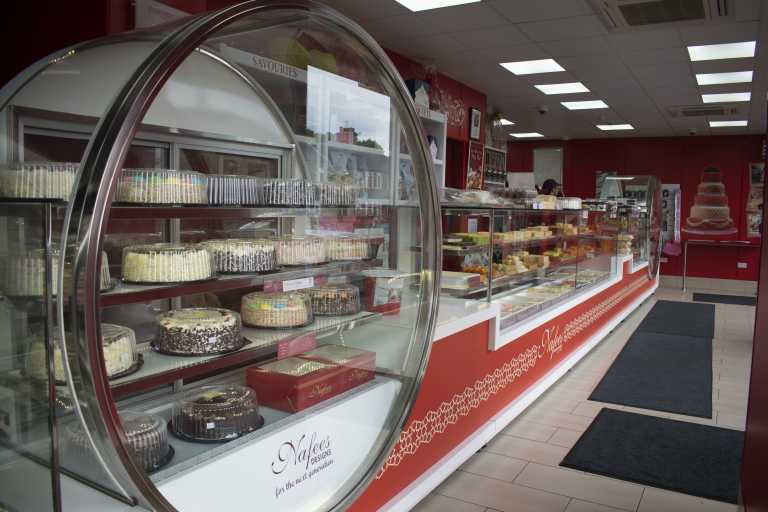
Meanwhile, some companies have shuttered their premises for a few months and are now finding routes back to full trading. One was Yorkshire based bakers and confectioners Nafees Bakers & Sweets. The award-winning bakers has already boldly reopened more than 30 of their retail shops, with safety and social distancing measures to protect its employees and customers.

A spokesperson for Nafees told Asian Standard: “We run an extremely large operation and are lucky we have factory space large enough to implement 2 metre distancing which will keep our staff  safe and help us meet with all the lockdown guidelines.

“As a business we have always kept extremely high standards where hygiene has been concerned with sanitisers already in place all over our production facility, but it was imperative we stepped up a little more and had a major deep clean to restart the business with even more safety precaution than ever. We have also invested in providing training, PPE and support to all our start of whom most will be returning to work after being away for more than 7 weeks.”

During the business closure the award-winning bakery had placed more than 90 per cent of their staff  on furlough, through the coronavirus job retention scheme and used the Business Rates Relief scheme to help plan and invest further into putting in place a plan and a new way to operate their 10,000 sq feet bakery.

“The safety of our customers and workforce is our number one priority and this has been the main focal point of our plans to re-open for business.” A spokesperson said.

The gradual opening of the bakers, retail shops has helped the food manufacturer implement changes, monitor response and learn from this to encourage other stores to implement the same good practices.

All retail stores have been equipped with signage to mark 2 metre distancing, along with hand sanitisers available at all entrances and checkouts.

There is also a limit on how many customers can enter at any one time, and all customers are encouraged to order by phone and collect at given time slots.

“We are going to continue to monitor our operations and will provide our staff  continuous training and any new updates to make sure we are fully aligned with the Government rules, but also ensuring our customers and our staff  remain safe at all times”

Helping them helping you

At the start of April, the Nissan car plant in Sunderland announced the majority of its workers would be furloughed. Only those staff involved in the ‘security and integrity’ of the site, would remain at work.

You’d expect nothing less of a company with an outstanding reputation who often do great work

in the wider community. Having furloughed the majority of workers as part of the Government scheme introduced as the corona virus crisis began to worsen, it also topped up pay for those people above the threshold of the Government scheme.

Diversifying Skills

That faith was also returned when a small team of workers were given the task of using their skills to help make personal protective equipment, including visors and gowns, for the NHS.

The team working to Government specifications created aprons out of tear-resistant polythene at the Gateshead College Skills Academy for Sustainable Manufacturing and Innovation.

Adam Pennick, Nissan production directors said: “We are proud to support our healthcare workers wherever we can during this crisis. The team at the plant have done an excellent job in creating a production process in such a short space of time. It really highlights the skill and dedication we have in our team at Sunderland plant.”

Following the scheme’s success, a total of 50 – under one per cent of the 6,000 workforce recently returned to work at the plant, as part of a pilot scheme involving a new safety regime.

Those employees returning were part of the team responsible for producing both engines and transmission, otherwise known as the Nissan powertrains.

This was only done in the light of extensive risk assessments carried out in collaboration with various manufacturers around the world. The aim was to enforce measures designed to protect employees from coronavirus. And of course, the best public health advice was utilised to the maximum.

Nissan said: “Regular reviews will take place throughout each phase of this pilot, taking into account the feedback from the teams involved.

“This will inform the return to work protocols for the rest of the factory in the coming weeks.

“During this period the majority of plant employees will remain furloughed, and we are grateful for the Government support that has enabled us to take this action.

“We are currently planning a phased resumption of production in early June.”

The innovative company added it was “looking forward to resuming business” as soon as conditions in Europe allow. It has been putting in place “a comprehensive set of safety measures to protect the health and wellbeing of employees”. The firm always had the goal of steering the business through the crisis, while maintaining activities critical for business continuity.

Now, thanks to Government help one of the world’s greatest car manufacturers will now be able to seamlessly slip back into full production.

On the 26 May Health secretary Matt Hancock told MPs, the UK had reached the peak of the outbreak

– but social distancing measures were not allowed to be relaxed or changed.

Here we go

The pandemic situation in the UK is now improving – rapidly – with each passing day. We all want to get our lives and our economy back. With safety measures in place as we return to work and normality, we can speed the process further.

Denmark has already sent children back to school and halved social distancing to a metre with no apparent ill-effects. In Germany friends are eating together indoors at restaurants.

Elsewhere, in distant places such as Vietnam and Hong Kong, there have been remarkably few coronavirus deaths, and life has carried on almost as normal throughout the pandemic.

How could this possibly be? Because they had safety systems in place ready to use after earlier experiences with SARS and other viruses that hit them far harder than us.

Let’s learn from them not to worry about the last wave of the virus but to be alert and practical – let’s prepare to fight and win against the next wave or the next disease whenever it comes.

Return safely to work with the benefit of your experience, your new skills, and your alertness.

The Government has published guidance (https://www.gov.uk/guidance/working-safely-during-coronavirus-covid-19) to support businesses to reopen and for workers to feel confident, safe and empowered to return to work.
If you run a business and would like to know which of the coronavirus schemes you are eligible for, you can use the business support finder tool (https://www.gov.uk/business-coronavirus-support-finder)
It takes just minutes to complete and will help you easily find support for your business.

Bradford Businesses urged to take advantage of new app aimed to help them bounce back from Covid-19

BRADFORD BID is urging city centre businesses to take advantage of an innovative new scheme aimed at boosting trade and helping them bounce back from the Covid-19 lockdown.

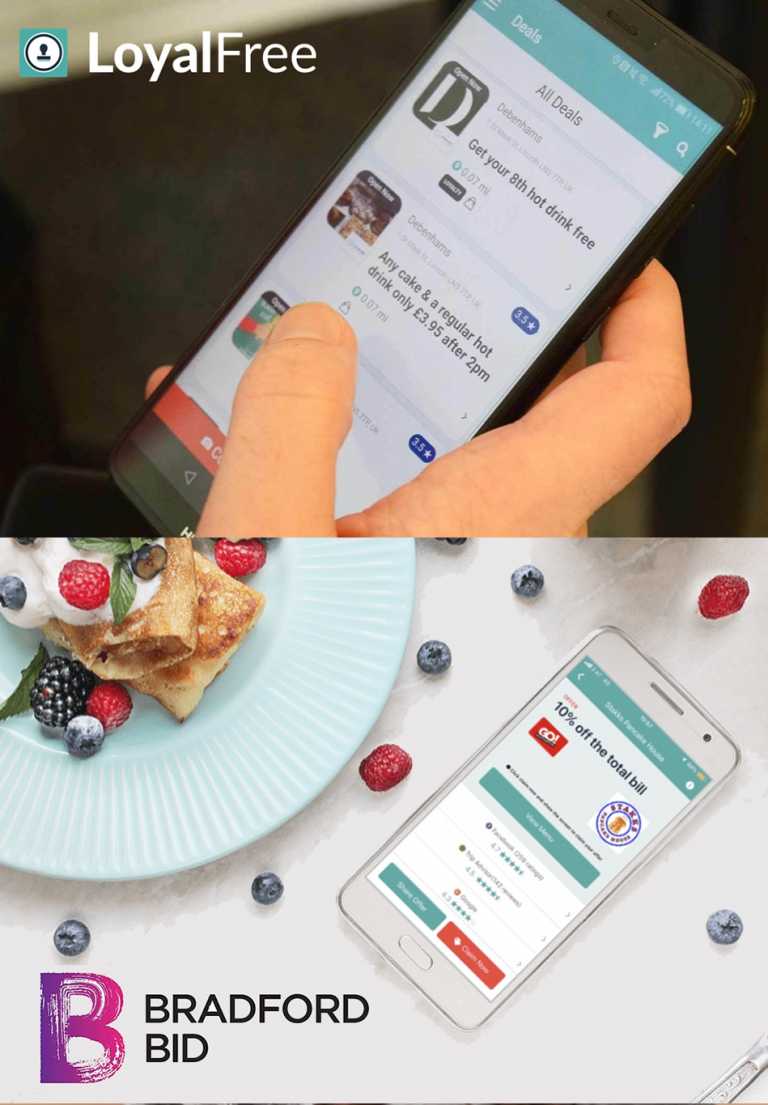
The Business Improvement District has teamed up with multi-award-winning app LoyalFree which has been making a big impact supporting high streets in 21 towns and cities across the country.

The app – which, so far, has more than 47,000 users – provides a completely free opportunity for local businesses to promote their offers and events, with the option to run a “loyalty stamp” scheme, feature in local shopping trails and sell products or vouchers online through a no-commission marketplace.

BID manager Jonny Noble said: “Businesses across the country have been badly hit by the Coronavirus restrictions and the BID is working hard to find innovative and effective ways to support them both now and as they try to bounce back after the lockdown is eased.

“The LoyalFree app scheme has been hugely successful across the country and it makes absolute sense for us to make this available to the BID’s 630 levy-payers, especially as it is free for them to use and simple to set up.”

BID chairman Ian Ward added: “We would urge BID business members to come forward with their offers and vouchers as soon as possible so that, when we launch this to the public in the next few weeks, there is an impressive array of benefits to get them signing up and supporting the city centre.

“There is nothing to lose and potentially a great deal to gain for everyone who gets involved.”

Businesses can see the app and how it works at: loyalfree.co.uk/demo.

The place promotion app will highlight various aspects of Bradford, including tourism information, business offers, event listings, interactive trails and more.

Levy-paying businesses will benefit from the promotion of their offers and events to locals and visitors alike; they will get customer insights through a live dashboard; and links to their website, social media, reviews and more, all completely free.

They will feature in city centre “trails” on the LoyalFree app, which will guide shoppers to a list of retailers, hospitality and leisure providers, such as Open for Business, Vegan Food, Family Friendly, Dog Friendly, Best Independents and so on. Eventually, these may be interactive ones where people can vote and scan.

Sophie Hainsworth, one of the app’s co-founders, said: “There are many ways businesses can get involved with the app right now. It is vital we populate it with as much information as possible so we can launch this to the public and start to help your business and promote sales as soon as possible.

“The best performing offers are usually exclusive to the app or a digital loyalty-stamp scheme. In these times, we are aware this may not be immediately possible and in the short term we can promote online deals too.

“Cafes, for instance, may currently opt to run a loyalty scheme on takeaway drinks – such as “get your 6th coffee free” – as all that is required is a QR code for customers to scan with their smartphone.”

More than 2,500 businesses are currently promoted through the app and more than 130,000 digital loyalty stamps have been collected to date.

All levy-paying businesses have to do to start the process is send an e-mail to info@loyalfree.co.uk starting with “Bradford BID area” and including: their business name, details of the offer or loyalty scheme and their terms and conditions. LoyalFree will create a profile and send the business a log-in to make changes and add information if they wish. There have been more than 400,000 views of business profiles since the app launched.

Mr Noble said: “It is brilliantly simple. And, in the current difficult climate, we are also offering a new service alongside the app to support independent businesses, the LoyalFree Marketplace.

“It allows BID levy-payers to sell products online, without any charge or commission except a small payment processing fee. So, if you don’t have an e-commerce website or want to avoid large fees on other platforms, this is perfect.”

Mother launches faith-inspired jewellery brand on anniversary of son’s death

On the anniversary today of her son’s death, a mother has launched a unique faith-inspired jewellery brand in honour of his memory.

Hasina Momtaz, founded Soul Gems London, which offers beautiful, statement jewellery with inspirational faith-based messages of hope and meaningful reminders.

Although the Collection will find resonance with Muslims, she says the pieces are intended for everybody who appreciates elegant yet affordable jewellery, regardless of faith.

Hasina’s son, Sami, was killed instantly in a road traffic collision on 3 June 2014 at the age of 18 and today marks the sixth anniversary of his death.

Hasina Momtaz

Speaking about how her son’s entrepreneurial flair inspired her to set up Soul Gems London, Hasina said:

“This is a real departure from my previous PR career and it’s pretty daunting to launch a business during a global pandemic. However, my son Sami, who is the inspiration behind Soul Gems London, was very entrepreneurial from a young age and always encouraged me to go into business. I had no idea how to combine that with my passion for jewellery and my faith-based values until the idea for Soul Gems London was born in 2019”.

There is one particular piece in the Soul Gems London Collection called the ‘Paradise’ necklace which was created specially in Sami’s memory.

This distinctive necklace is engraved with the Arabic proverb “In paradise there is love without separation”. One side of the pendant is engraved with Arabic lettering and the other side is engraved with the English meaning.

Telling us more about how she came up with the idea for some of the pieces in the Collection as well as her future hopes, Hasina continued:

“I came across this proverb after Sami’s death and it gave me hope that we would be reunited in a better place one day.

“I’ve had amazing feedback on all the pieces but one customer in particular has bought three Paradise necklaces for friends who have lost loved ones recently. She messaged me to say that it’s brought them peace and hope and that is at the heart of what I want to do which is to bring a little bit of joy to people if I can.

“Non-Muslim friends have also bought pieces from the Collection because they loved the beauty and uniqueness of the pieces. They asked me what the meaning is behind certain Arabic words and really liked the messages when I explained to them.

“Perhaps through something as small as a beautiful piece of jewellery, barriers between communities and faiths can be broken down. That would be a wonderful thing, especially in the current turbulent world we are in.

“Sami was an amazing young man who was loved by many. As well as being entrepreneurial, Sami really wanted to help those less fortunate than himself and, in the month of Ramadan before he died, he fundraised for a charity in the UK.

“I would like to continue what Sami started and hope to set up a Foundation in Sami’s memory which would be supported through profits from the business to help those less fortunate in the UK and abroad”.

Other pieces in the collection have reminders inscribed on them about having gratitude and patience, two of the foundations of faith but also universal messages that resonate regardless of a faith or none. One piece in the Collection is a bangle which has the inscription “Sabr – this too shall pass”. Sabr means ‘patience’ and it’s a timely reminder that at some point the bad times will pass and give way to better, happier days ahead.

There are also pieces with Arabic calligraphy artwork on them as well as sets such as the ‘Faith Foundations’ cuff Collection.

Hasina’s Collection, inspired by Sami’s memory, is at: www.soulgems.london

Job Retention Activates Charity Work

PRODUCED IN PARTNERSHIP WITH UK GOVERNMENT

By Raheema Khan

Harleen Kaur is an ambitious sports enthusiast and has won many accolades and titles for her martial arts. At the age of 19 she won the world title in the WMKF world championships.

With plans well under way to graduate from her Sports Sciences degree Harleen was elated to have landed her dream job of a Sports Development Manager for the Inspirational Women Foundation. The role was to help encourage more women to take on sport.
The martial artist had really started making an impact when she organised a sports club launch for women on International Women’s Day, where more than 100 women turned up to participate in various sports activities. Sadly, just has her project got off the ground, lockdown was announced.

Like thousands of new employees, with the burden of her student loan and all contact sport cancelled, the twenty-one-year-old was deeply worried about losing her dream job.
However, thanks to the Governments Job Retention Scheme, Harleen’s employer has been able to furlough her until lockdown is eased for sporting activities to resume.
As part of the Chancellors’ £330bn package of support for businesses, businesses across the UK can put employees on a period of temporary leave (furlough) and apply for a government grant to cover 80 per cent of those workers’ usual monthly wage costs, up to a cap of £2,500 a month. The scheme is now available until the end of October.

There is a wide range of financial support available to firms of all sizes. For more information visit:  https://www.gov.uk/coronavirus/business-support

Harleen told Asian Sunday: “I love sports and I love my job, which is my dream as I get to help encourage women to participate in sports and to teach them martial arts. So, naturally I was devastated when lockdown happened.

“I am glad the government introduced the furlough scheme, which has allowed my employer to save my job, and I have income which helps support my basic expenses.

“I am grateful for this scheme, as my living expenses are covered and while I am waiting to go back to work, I have been able to give back and help the community during these testing times by delivering food parcels and offering practical support to get them through this challenging period.”

In normal times, Harleen would be running the Inspirational Women’s Foundation sports club and be taking on her own classes to teach women Taekwondo. Now with her job being retained, she has helped deliver food parcels to more than 200 households.

“I am lucky my job has been saved, so I am grateful and hence it’s time for me to give back to the community” The Sports Development manager concluded.

Check out the simple business support finder to see whether your business is eligible for financial support: https://www.gov.uk/business-coronavirus-support-finder

The government has introduced a range of Business Support Packages. Here is some information that might help.

The Coronavirus Job Retention Scheme

  • Businesses across the UK can put employees on a period of temporary leave (furlough) and apply for a government grant to cover 80% of those workers’ usual monthly wage costs, up to a cap of £2,500 a month.
  • The scheme is now available until the end of October.
  • The scheme has already protected 7.5 million workers and almost 1 million businesses.

Self-Employment Income Support Scheme (SEISS)

  • The Self-Employment Income Support Scheme allows eligible self-employed individuals to claim a taxable grant of 80% of their average monthly trading profits, paid out in a single instalment covering 3 months, and capped at £7,500 in total. Around 95% of people who receive the majority of their income through self-employment could be eligible.
  • To benefit from SEISS, you need to receive at least half of your income from being self-employed and be earning under £50,000 in profits.
  • You can use HMRC’s eligibility checker to see if you could benefit from the scheme.

Statutory Sick Pay:

The Coronavirus Statutory Sick Pay Rebate Scheme will repay employers the current rate of Statutory Sick Pay (SSP) that they pay to current or former employees for periods of sickness starting on or after 13 March 2020.

VAT Deferrals

  • The Government has given the option to defer VAT payments to UK VAT-registered firms, for payments due alongside VAT returns until the end of June. If you’re a UK VAT-registered business and have a VAT payment due between 20 March 2020 and 30 June 2020, you have the option to either defer the payment until a later date, or pay the VAT due as normal.
  • HMRC will not charge interest or penalties on any amount deferred.

Business rates holiday and eviction protection:

The Government has introduced a business rates holiday for the retail, hospitality and leisure sectors and nurseries, meaning eligible properties in England will pay no business rates this year. This relief is worth almost £10 billion. [Note: business rates are devolved so this applies to England only – the Devolved Administrations have their own schemes and will receive Barnett consequential funding.]

  • Commercial tenants who cannot pay their rent because of coronavirus will be protected from eviction.
  • The Small Business Grant Fund (SBGF) provides businesses with a £10,000 grant per property, for each of their properties which is in receipt of Small Business Rates Relief or Rural Rates Relief. This scheme is only applicable in England.
  • The Retail, Hospitality and Leisure Grant Fund (RHLGF) provides businesses with grants of up to

£25,000 per property, for each retail, hospitality or leisure property with a rateable value below £51,000. This scheme is only applicable in England.

  • Local authorities are contacting eligible businesses directly to arrange grant payments. If a business believes they are eligible and has not yet heard from their local authority, they should get in touch with them to ask about these payments.
  • On 1 May, the Government also allocated up to an additional £617 million to local authorities to enable them to make discretionary grants to small businesses in their communities, which have been excluded from the SBGF and RHLGF because of the way they interact with the business rates system. This only applies in England.
  • Businesses are encouraged to look out for their local authority’s version of the Discretionary Grants Fund, and to contact their local authority for more information in due course. This only applies in England.

Loans:

  • The Government’s Bounce Back Loans Scheme provides loans of up to £50,000 to small businesses, with an 100% government-backed guarantee for lenders. These loans will be interest free for the first 12 months and businesses can apply online with a short and simple form.
  • The Coronavirus Business Interruption Loan Scheme is available for loans or other forms of finance of up to £5m.
  • The Government will pay interest and any fees for the first 12 months, and will provide the lender with an 80% guarantee to support the lending.
  • This scheme is available UK-wide.
  • The Coronavirus Large Business Interruption Loan Scheme (CLBILS) supports large businesses with an annual turnover of over £45 million per year to apply for up to £25 million of finance.

Future Fund:

The Future Fund will issue convertible loans between £125,000 to £5 million to innovative companies which are facing financing difficulties due to the coronavirus outbreak.

If your business needs to hire now, there is help available to fill your vacancies quickly.

Keep job descriptions as generic as possible to make sure you don’t miss out on great people with transferable skills.

Visit: https://employerhelp.dwp.gov.uk/ to find out more.

New Business Surviving in Whitley Bay

0

PRODUCED IN PARTNERSHIP WITH UK GOVERNMENT 

By Grahame Anderson

Sangeeta Chopra is looking forward to keeping her dream alive thanks to a government grant as lockdown restrictions are slowly eased.

Like thousands of business owners across the UK the 37-year-old mum of two boys, found her future in the balance because of the coronavirus pandemic. Little more than a year into the successful launch of ‘Namaste’, ‘A Taste Of India’, this visionary businesswoman had to find other ways of utilising her skills as the crisis started to bite.

Having expertly put in place an Indian café and speciality food store in the heart of the popular seaside town of Whitley Bay, this crisis is the last thing she needed.
When the lockdown kicked in Sangeeta quickly adapted her premises to provide special takeaways. She told me:“I wanted to help the NHS somehow and the festival of Durga Ashtami is a very important time in the Hindu calendar.

“I thought that would be a good time to supply NHS front line workers with healthy food to keep them nourished during their busy shifts.” In normal times Sangeeta would serve a set menu offering meals such as daal makhani (lentils), butter chicken, chilli paneer, rajma
(red kidney beans) and chana curry, served with rice or naan. In short – the very best Asian homemade food.

There is a wide range of financial support available to firms of all sizes. For more information visit: https://www.gov.uk/coronavirus/business-support

Her caring attitude certainly didn’t go un-noticed in an area set for a thriving future as exciting regeneration takes place, at pace. Sangeeta qualified for Small Business Rate Relief (SBBR) or Rural Rate Relief – meaning she was able to receive a £10K grant from the government, as part of Rishi Sunak’s £330bn package of support for businesses, equivalent to 15 per cent of GDP.

Sangeeta told Asian Sunday: “The grant was paid within a week but I don’t think £10k is enough as I’m not letting customers into my shop and as a result my stock is going out of date.”

“I am a limited company who made a loss in my first year so didn’t get a wage and this year was supposed to be the year when I became firmly established and well known – but because of lockdown the situation has changed. So the grant has served to pay my business loan off which is good.

“If I didn’t have the grant I would be struggling more, but though it’s not enough I do appreciate what I’ve got. I have removed all my tables and chairs for this year at least and will open shortly as an Indian Deli along with specialist Indian food and unique alcoholic drinks. I’m just thankful I can still operate in this pandemic whereas some businesses can’t.”

Check out the simple business support finder to see whether your business is eligible for financial support: https://www.gov.uk/business-coronavirus-support-finder

The government has introduced a range of Business Support Packages. Here is some information that might help.

The Coronavirus Job Retention Scheme

  • Businesses across the UK can put employees on a period of temporary leave (furlough) and apply for a government grant to cover 80% of those workers’ usual monthly wage costs, up to a cap of £2,500 a month.
  • The scheme is now available until the end of October.
  • The scheme has already protected 7.5 million workers and almost 1 million businesses.

Self-Employment Income Support Scheme (SEISS)

  • The Self-Employment Income Support Scheme allows eligible self-employed individuals to claim a taxable grant of 80% of their average monthly trading profits, paid out in a single instalment covering 3 months, and capped at £7,500 in total. Around 95% of people who receive the majority of their income through self-employment could be eligible.
  • To benefit from SEISS, you need to receive at least half of your income from being self-employed and be earning under £50,000 in profits.
  • You can use HMRC’s eligibility checker to see if you could benefit from the scheme.

Statutory Sick Pay:

The Coronavirus Statutory Sick Pay Rebate Scheme will repay employers the current rate of Statutory Sick Pay (SSP) that they pay to current or former employees for periods of sickness starting on or after 13 March 2020.

VAT Deferrals

  • The Government has given the option to defer VAT payments to UK VAT-registered firms, for payments due alongside VAT returns until the end of June. If you’re a UK VAT-registered business and have a VAT payment due between 20 March 2020 and 30 June 2020, you have the option to either defer the payment until a later date, or pay the VAT due as normal.
  • HMRC will not charge interest or penalties on any amount deferred.

Business rates holiday and eviction protection:

The Government has introduced a business rates holiday for the retail, hospitality and leisure sectors and nurseries, meaning eligible properties in England will pay no business rates this year. This relief is worth almost £10 billion. [Note: business rates are devolved so this applies to England only – the Devolved Administrations have their own schemes and will receive Barnett consequential funding.]

  • Commercial tenants who cannot pay their rent because of coronavirus will be protected from eviction.
  • The Small Business Grant Fund (SBGF) provides businesses with a £10,000 grant per property, for each of their properties which is in receipt of Small Business Rates Relief or Rural Rates Relief. This scheme is only applicable in England.
  • The Retail, Hospitality and Leisure Grant Fund (RHLGF) provides businesses with grants of up to

£25,000 per property, for each retail, hospitality or leisure property with a rateable value below £51,000. This scheme is only applicable in England.

  • Local authorities are contacting eligible businesses directly to arrange grant payments. If a business believes they are eligible and has not yet heard from their local authority, they should get in touch with them to ask about these payments.
  • On 1 May, the Government also allocated up to an additional £617 million to local authorities to enable them to make discretionary grants to small businesses in their communities, which have been excluded from the SBGF and RHLGF because of the way they interact with the business rates system. This only applies in England.
  • Businesses are encouraged to look out for their local authority’s version of the Discretionary Grants Fund, and to contact their local authority for more information in due course. This only applies in England.

Loans:

  • The Government’s Bounce Back Loans Scheme provides loans of up to £50,000 to small businesses, with an 100% government-backed guarantee for lenders. These loans will be interest free for the first 12 months and businesses can apply online with a short and simple form.
  • The Coronavirus Business Interruption Loan Scheme is available for loans or other forms of finance of up to £5m.
  • The Government will pay interest and any fees for the first 12 months, and will provide the lender with an 80% guarantee to support the lending.
  • This scheme is available UK-wide.
  • The Coronavirus Large Business Interruption Loan Scheme (CLBILS) supports large businesses with an annual turnover of over £45 million per year to apply for up to £25 million of finance.

Future Fund:

The Future Fund will issue convertible loans between £125,000 to £5 million to innovative companies which are facing financing difficulties due to the coronavirus outbreak.

If your business needs to hire now, there is help available to fill your vacancies quickly.

Keep job descriptions as generic as possible to make sure you don’t miss out on great people with transferable skills.

Visit: https://employerhelp.dwp.gov.uk/ to find out more.

Innovation and grant initiative save charity

0

PRODUCED IN PARTNERSHIP WITH UK GOVERNMENT 

Global Diversity and Positive Action (GDPA) is a charity based in the heart of Huddersfield city centre. The charity’s main aims are to empower and rehabilitate young people. Through the cosy community coffee shop and fantastic meeting space the charity has been able to support many in the local community. Unfortunately, since the announcement of lockdown the café and meeting spaces have had to close.

However, thanks to the chancellor’s £330bn package of support for businesses GDPA has been able to re-invent itself to survive the current climate.

Sharon Jandu who is the founder of GDPA told Asian Sunday:
“Our community café was doing really well until we had to close it. Safety for us was especially important. It was really worrying and disheartening that we had to close and let our community down, but thanks to several initiatives we have hope of surviving”

Over the past year the space created by GDPA at 9 Ramsden Street, has been a welcome part of Kirklees, as it has offered opportunities for young people to come and gain support, advice and through many of the training schemes learn new skills.
Thanks to the Small Business Rate Relief (SBBR) or Rural Rate Relief grant they have been able to do that and have been saved from closing.

There is a wide range of financial support available to firms of all sizes. For more information visit: https://www.gov.uk/coronavirus/business-support

The funds have helped pay overhead costs and helped the charity restructure so it can adapt to the current rules of lockdown and be able to open with service users safety and social distancing at the heart of everything they do.

“We have managed to quickly adapt by turning the place into a hub with kiosks, where people can book in advance and continue getting that advice.” Said Sharon

“At the back of the premises we have installed a 75inch interactive smart screen, which will enable people to book and conduct virtual meetings. We hope to continue being able to serve the community by assisting with financial literacy as well as digital inclusion.
“The digital enhancements will also mean we can continue supporting women of BAME background with skills and confidence building.”

In addition to the government funding GDPA have also been able to secure devices from the Good Things Foundation, which they will be giving to vulnerable members of the community.

Sharon concluded that if it weren’t for these initiatives, and a little bit of innovation she doubts GDPA would have been able to see a way forward.

Check out the simple business support finder to see whether your business is eligible for financial support: https://www.gov.uk/business-coronavirus-support-finder

The government has introduced a range of Business Support Packages. Here is some information that might help.

The Coronavirus Job Retention Scheme

  • Businesses across the UK can put employees on a period of temporary leave (furlough) and apply for a government grant to cover 80% of those workers’ usual monthly wage costs, up to a cap of £2,500 a month.
  • The scheme is now available until the end of October.
  • The scheme has already protected 7.5 million workers and almost 1 million businesses.

Self-Employment Income Support Scheme (SEISS)

  • The Self-Employment Income Support Scheme allows eligible self-employed individuals to claim a taxable grant of 80% of their average monthly trading profits, paid out in a single instalment covering 3 months, and capped at £7,500 in total. Around 95% of people who receive the majority of their income through self-employment could be eligible.
  • To benefit from SEISS, you need to receive at least half of your income from being self-employed and be earning under £50,000 in profits.
  • You can use HMRC’s eligibility checker to see if you could benefit from the scheme.

Statutory Sick Pay:

The Coronavirus Statutory Sick Pay Rebate Scheme will repay employers the current rate of Statutory Sick Pay (SSP) that they pay to current or former employees for periods of sickness starting on or after 13 March 2020.

VAT Deferrals

  • The Government has given the option to defer VAT payments to UK VAT-registered firms, for payments due alongside VAT returns until the end of June. If you’re a UK VAT-registered business and have a VAT payment due between 20 March 2020 and 30 June 2020, you have the option to either defer the payment until a later date, or pay the VAT due as normal.
  • HMRC will not charge interest or penalties on any amount deferred.

Business rates holiday and eviction protection:

The Government has introduced a business rates holiday for the retail, hospitality and leisure sectors and nurseries, meaning eligible properties in England will pay no business rates this year. This relief is worth almost £10 billion. [Note: business rates are devolved so this applies to England only – the Devolved Administrations have their own schemes and will receive Barnett consequential funding.]

  • Commercial tenants who cannot pay their rent because of coronavirus will be protected from eviction.
  • The Small Business Grant Fund (SBGF) provides businesses with a £10,000 grant per property, for each of their properties which is in receipt of Small Business Rates Relief or Rural Rates Relief. This scheme is only applicable in England.
  • The Retail, Hospitality and Leisure Grant Fund (RHLGF) provides businesses with grants of up to

£25,000 per property, for each retail, hospitality or leisure property with a rateable value below £51,000. This scheme is only applicable in England.

  • Local authorities are contacting eligible businesses directly to arrange grant payments. If a business believes they are eligible and has not yet heard from their local authority, they should get in touch with them to ask about these payments.
  • On 1 May, the Government also allocated up to an additional £617 million to local authorities to enable them to make discretionary grants to small businesses in their communities, which have been excluded from the SBGF and RHLGF because of the way they interact with the business rates system. This only applies in England.
  • Businesses are encouraged to look out for their local authority’s version of the Discretionary Grants Fund, and to contact their local authority for more information in due course. This only applies in England.

Loans:

  • The Government’s Bounce Back Loans Scheme provides loans of up to £50,000 to small businesses, with an 100% government-backed guarantee for lenders. These loans will be interest free for the first 12 months and businesses can apply online with a short and simple form.
  • The Coronavirus Business Interruption Loan Scheme is available for loans or other forms of finance of up to £5m.
  • The Government will pay interest and any fees for the first 12 months, and will provide the lender with an 80% guarantee to support the lending.
  • This scheme is available UK-wide.
  • The Coronavirus Large Business Interruption Loan Scheme (CLBILS) supports large businesses with an annual turnover of over £45 million per year to apply for up to £25 million of finance.

Future Fund:

The Future Fund will issue convertible loans between £125,000 to £5 million to innovative companies which are facing financing difficulties due to the coronavirus outbreak.

If your business needs to hire now, there is help available to fill your vacancies quickly.

Keep job descriptions as generic as possible to make sure you don’t miss out on great people with transferable skills.

Visit: https://employerhelp.dwp.gov.uk/ to find out more.

Chancellor Extends Coronavirus Job Retention Scheme

By Grahame Anderson

The Chancellor Rishi Sunak has announced an extension to the coronavirus job retention scheme now running until the end of October. This means furloughed staff will continue to have their wages paid at 80 per cent up to £2,500 per month, and not cut to 60 per cent as previously speculated in some parts of the media.

Speaking In The Commons

Speaking in the Commons on Tuesday he said: “Nobody who is on the furlough scheme wants to be on this scheme. People up and down this country believe in the dignity of their work, going to work, providing for their families, it’s not their fault their business has been asked to close or asked to stay at home.

“That is why I established this scheme to support these people and their livelihoods at this critical time.”

Mr Sunak told the house seven-and-a-half million employees were being supported through the scheme, with nearly a million businesses also benefiting from the government’s help.

Unprecedented Scheme

It’s estimated this unprecedented scheme has so far cost the government well over £8billion and counting each month.

In essence, this takes the state funding of business by a British Government up to eight months – something not seen before in our history.

Last week Mr Sunak had warned the furlough scheme was not “sustainable” at its current rate although he promised there would be no “cliff edge” cut-off.

Clearly, there’s been a re-think with the Chancellor rejecting suggestions some people might get “addicted” to furlough if it was extended.

Asking Employers To Share

After July, employers currently using the scheme will be able to bring furloughed employees back part-time. The government however, will ask firms to “start sharing with them, the costs of paying people’s salaries”.

The original plan was to prepare to “wean” workers and businesses off the programme before it was due to end in June. Mr Sunak has eventually bowed to calls to have the scheme prolonged.

Shadow Chancellor

Shadow chancellor Anneliese Dodds has said: “It is welcome that the Chancellor has heeded the call by Labour, trade unions, and businesses for more flexibility in the scheme, to support employees to go back to work part-time.

“The government must clarify today when employers will be required to start making contributions, and how much they’ll be asked to pay. If every business is suddenly required to make a substantial contribution from the 1st August onwards, there is a very real risk that we will see mass redundancies.”

A Bradford communications firm offers top tips on working from home – long term.

0

By Raheema Khan

The impact of Coronavirus continues to affect our daily lives; with millions of us now working from home. Undoubtedly, many of us are still adapting to the enormity of this challenge, and it’s very likely that what was a short-term measure could end up being more long term.

With the announcement of the government easing lockdown measures, the advice to work from home remains unequivocal: all those who can work from home should work from home, and all those who fall into the “extremely vulnerable” category must not come into work under any circumstances.

­

So, for those who are still considering working from home, or those who are still struggling to readjust to the new working environment, Bradford based communications provider is here to help.

Nasar Hussain, founder and Managing Director of award winning telecoms business, ITC (Telecoms Simplified)  – based at Listerhills Science Park told Asian Sunday that there are many benefits for businesses that encourage and support their employees to work from home, aside from adhering to government guidelines.

There are some obvious advantages, beginning with time efficiency – if you’re working from home it means you’re spending less time on travel.  This has other knock on effects such as reducing your carbon footprint and saving money on travel. Studies have also shown that remote employees work 1.4 more days per month than their office-based counterparts, resulting in increased productivity.

Nasar shares his key ‘must haves’ to help you settle in and closely replicate your work environment at home.

Ensure staff have access to work IT systems/telecoms:

  • They will need a laptop/PC
  • A secure Virtual Private Network (VPN)/Remote Desktop (RDP) or various third-party software available (if not already using the cloud) allowing staff to connect to their office machine/server, thus allowing users to have access to ALL the systems they have when working in the office
  • Telecoms – There are apps available for either iPhone or Android phones that allow people to make/receive calls as if they were in the office and also transfer between other members of the team – effectively giving users the same access they have whilst working in the office
  • The apps allow business as usual (BAU) in most scenarios allowing companies to use their existing music on hold and out of hours voicemail(s)
  • The app(s) also allow users to have all important conference calls which is vital in keeping all stakeholders in the loop and to have regular catchups with team members. This may be especially important so management can listen to issues that staff maybe experiencing either with work or their new environments.

ITC are offering “micloud VoIP” apps (phone and desktop) free of charge for up to 3 months to existing and new customers.

The above will give all team members the same functionality as they had sitting at their desks at work, while being in the safety of their own homes during the current pandemic.

“Staff are very often used to working from multiple screens, at dedicated workstations in their office environments. When working from home they will most likely be working from laptops and can be in a variety of locations throughout their homes from being sat on their beds to sitting at coffee tables”.

Nasar suggests (where possible) to move users’ desktops and screen(s) to their homes and provide a desk and seat for staff. He recommends: “There is no obligation to do this, however a small investment on each team member in these circumstances is the right thing to do, as this replicates their ‘desk at work’ and helps to keep good posture with the right tools for the job.“

A solid home internet connection is also essential to ensure positive workflow.

Nasar advises that employers should encourage staff to log into their internet using a Local Area Connection (network) cable. If that’s not possible then decent Wi-Fi should suffice.

MD Nasar Hussain

Furthermore, Nasar advises companies could perhaps provide equipment to boost Wi-Fi range with prices starting from £25 to £195 for a decent Access Point (AP) to boost wireless reach as basic routers provided by price conscious residential suppliers may not have decent WI-FI range as standard.

ITC’s vast experience in communications spans over 15 years in business and their know-how is bolstered with a dedicated team that provide around the clock technical support, strengthening their bespoke business continuity measures.

Other tips suggested by Nasar are to keep a routine to help you be efficient (but more importantly to keep spirits up) are as follows:

Dressing for work: LOOK the part, FEEL the part, ACT the part, BE the part.

  • Get dressed as if you are going to work
  • Sit at a workstation in a quiet part of the house/desk where possible
  • Keep active and go for regular walks
  • Drink plenty of water (only applicable when not fasting)
  • Try to get some regular exercise – plenty of options online. A personal favourite is the Body Coach – he is great for quick HIIT sessions (10 to 15 mins)

Nasar told Asian Sunday before the outbreak of Covid-19, he generally worked from home three days a week as he has already set up his infrastructure and provided training for his team, whom he trusts and relies on to keep the cogs turning at his office while he works remotely.

He believes that in following the above he can be effective and efficient which allows him to look at strategies to grow his business.

Nasar warns that it is an easy temptation to lounge about in his pyjamas, laying on the couch which would result in a drop in productivity.

In conclusion, Nasar says:  “Be positive, we can’t help this situation we find ourselves in, so make the most of it and be the best you can be; this starts with getting dressed to go to work and following a routine.

As a business owner it is vital to offer as much support as possible to staff to realise their full potential and ensure we maximise the impact we make in these challenging times.

** Get up and dressed for work. LOOK, FEEL, ACT and BE the part! **

Nasar and his team at ITC are available to help and support you with any technical issues that you may have working from home, or simply advise you with friendly business support in line with their ethos “a personal approach to business communications”.

They can be contacted on 0345 652 0450/01274 952 123 or by email info@clickitc.co.uk


A business guide to navigating past the lockdown

0

By Rehan Ahmed

Much of the world as we know has come to a standstill due to the coronavirus pandemic. Businesses have been forced to close for more than a month now, however there are talks of lockdown relaxing and for businesses to open up – but what would a post lockdown economy look like? What are the tips for survival?

We asked Rehan Ahmed a restructuring and insolvency Partner at Quantuma, a specialist independent business advisory firm, to offer his expert advice on the changing face of businesses in a post-lockdown world. Here’s what he had to say:

As we enter week seven of lockdown, this is definitely a moment in history that will change the way we live our lives going forward. As an advisory firm, we have been working with a number of businesses on their options during this period: advisory and restructuring work through to formal insolvency appointments.

Pivoting a business

In the public domain, we have already seen many businesses close their shops due to the enforced lockdown and, unfortunately, the reality is they may never reopen. That said many businesses have done phenomenally well during this pandemic. Some have been able pivot their business to open new routes to their customers, whilst others have seen demand increase due to changes in customer spending habits.

What we are seeing

Apart from ‘you must be really busy right now’, the most common question we have been asked here at Quantuma is ‘what can businesses do to survive and thrive during this period?’

I believe we are now entering what I call phase two of the pandemic. Phase one was the initial shock of the lockdown where we were advising businesses not to panic and explore all their options including government support that has been introduced. Phase two is about planning ahead for the duration of this pandemic and life after the lockdown. Here are some pointers as to what businesses should be doing during this period.

Tips on navigating this pandemic and beyond

  1. Cash management:

As the classic saying goes cash is King. Given we are now into week seven of the lockdown businesses need to manage cash more effectively and ensure they are not wasting valuable cash reserves.

  • Review and have sight of costs in all departments. Break down all costs and categorise them to the relevant departments – Sales, Finance, Supplier, HR, Operations etc.
  • Depending on the size of the business, allocate one department to someone to ensure the costs are being managed and make sure everyone is clear on what they are doing.
  • Review each expense and the following questions will dictate what needs to be done with that expense – is it needed? Is it critical? Can the business survive without this? Can the service be reduced and still survive? Can we get a holiday on this expense during the pandemic?
  • Keep in constant contact with the team and review your payment plans on a regular basis as some payments may change from critical payments to none critical payments so priority of payments may change.
  1. Diversify your offering

Entrepreneurs are always creative and innovative – this time is no different. Businesses should be looking at what can they be doing differently in the current climate to generate income within their business.

Pivoting the business could be a lifesaver in this climate especially during the lockdown period. I have heard of some fantastic success stories where a business has changed and remodelled themselves. An example would be that of a high-end restaurant whose takings have doubled to what they normally would have in the shop just through doing it through a delivery service with less staff. Think of ways your business can diversify and if possible do not just look at this as a short-term lockdown solution.

  1. Taking the time to improve processes

This period is a great time to assess your business in depth. There are some essential questions businesses should be asking themselves right now when reviewing the business:

  1. Can processes be improved?
  2. Are people within the business in the right role?
  3. Is the whole business focused on the current strategy and is it working?
  4. Can we use technology to improve efficiencies?

These questions would be a starting point for businesses to assess where they are, and each business will develop further questions as a result of this exercise. One of the interesting questions worth asking yourself right now is what would you do if you were to set up your business today? If your answer is different to what you are doing right now, then change it.

  1. Do not panic and seek professional advice
    Do not panic and make rash decisions during this period. Going down an insolvency route might well be the best option for a business at some point but make sure you explore all your options before making a decision.

This brings me nicely on to my final point of seeking professional advice. That classic phrase of ‘my mate said…’ has been replaced by ‘I saw a post that said…’ It would be advisable not to be sucked into listening to social media and basing your important business decisions on what you heard on various forums. Speak to specialist advisors in that area.

Whether you need to speak to an employment solicitor on advice on staffing issues or your accountant on how to deal with HMRC debts or an insolvency practitioner of options to restructure your business, these professionals will give you the right advice tailored to your business. The worst thing you could do is not take the right advice which could end up haunting you later on.

For more business advice and tips you can contact Rehan at Quantuma by email on rehan.ahmed@quantuma.com or visit the website at www.quantuma.com