


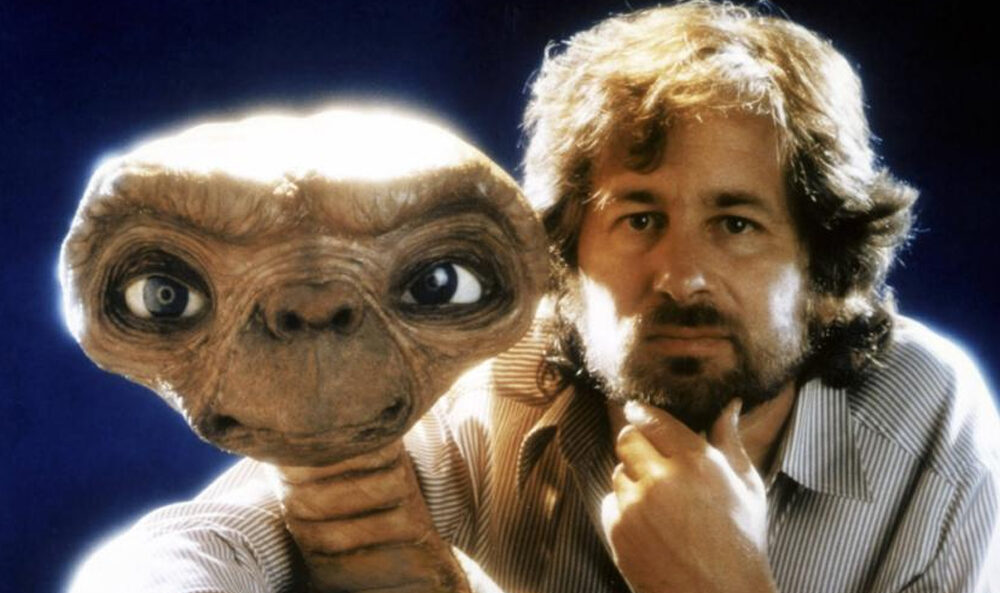
Steven Spielberg recently opened up about his efforts to prevent a sequel to his iconic 1982 film ET: The Extra-Terrestrial, calling it a “hard-fought victory” during a conversation with ET star Drew Barrymore. As reported by The Hollywood Reporter, Spielberg explained that at the time of the film’s release, he did not have the rights to stop a potential sequel.
“That was a real hard-fought victory because I didn’t have any rights,” Spielberg shared. “Before ET, I had some rights, but I didn’t have a lot of rights. I didn’t have what we call ‘the freeze,’ where you can stop the studio from making a sequel because you control the freeze on sequels, remakes, and other ancillary uses of the IP. I didn’t have that. I got it after ET because of its success.”
The sci-fi family classic, which starred Barrymore alongside Henry Thomas and Robert MacNaughton, became a cultural phenomenon. It won four Academy Awards and was the highest-grossing film of 1982. Spielberg discussed his decision not to pursue a sequel, stating that while he briefly considered it, he couldn’t come up with a compelling story. He recalled thinking about a concept inspired by The Green Planet, a book that would have focused on ET’s home planet, but ultimately felt it was better suited as a novel than a film.
“I just did not want to make a sequel. I flirted with it for a little bit — just a little bit to see if I could think of a story,” Spielberg said. “But it was better as a novel than I think it would have been as a film.”
Spielberg further emphasised, “I have no intention ever of seeing ET anywhere outside of this proscenium,” solidifying his belief that the story should remain untouched.
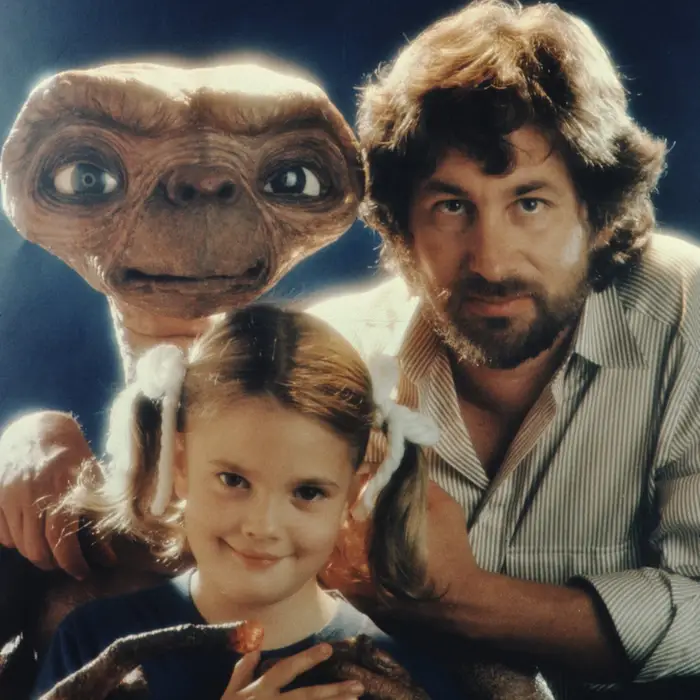
Barrymore, who played Gertie in the film, recalled their conversation about the sequel, agreeing with Spielberg’s decision. “I remember you saying, ‘We are not making a sequel to ET.’ I think I was eight. I remember being like, ‘OK, that’s a bummer, but I totally get it,'” she said. “I thought it was a smart choice. I very much understand it. Where do we go from here? They’re just going to compare it to the first and leave something that’s perfect alone in isolation open to scrutiny.”
The idea of a sequel was indeed floated in the 1980s due to the film’s massive success, with Universal Pictures considering a follow-up. However, the death of ET writer Melissa Mathison in 2015 made it difficult to imagine continuing the story without her involvement.
“It’s hard to think about a sequel without a script from her,” said Henry Thomas, who played Elliott, during a recent appearance on Barrymore’s daytime show.
The conversation also reflected on the profound impact ET had on both Spielberg and Barrymore. Spielberg shared that working on the film made him realise his desire to become a father, something he hadn’t considered before. “Up until that point, I would just make movies. My life was obsessed with just telling stories,” he explained. “But making ET made me want to be a dad.”
For Barrymore, ET remains a defining moment in her life and career. “It’s the one I’m the most proud of because it’s the one that changed my life,” she said, adding, “Everything in my life is about how I got believed in by one human being, and that is the life that I try to honour every day.”
ET: The Extra-Terrestrial (1982) is a sci-fi family classic about a young boy named Elliott who befriends an alien stranded on Earth. The film explores themes of friendship, compassion, and longing, and has since become one of the most beloved films of all time.