


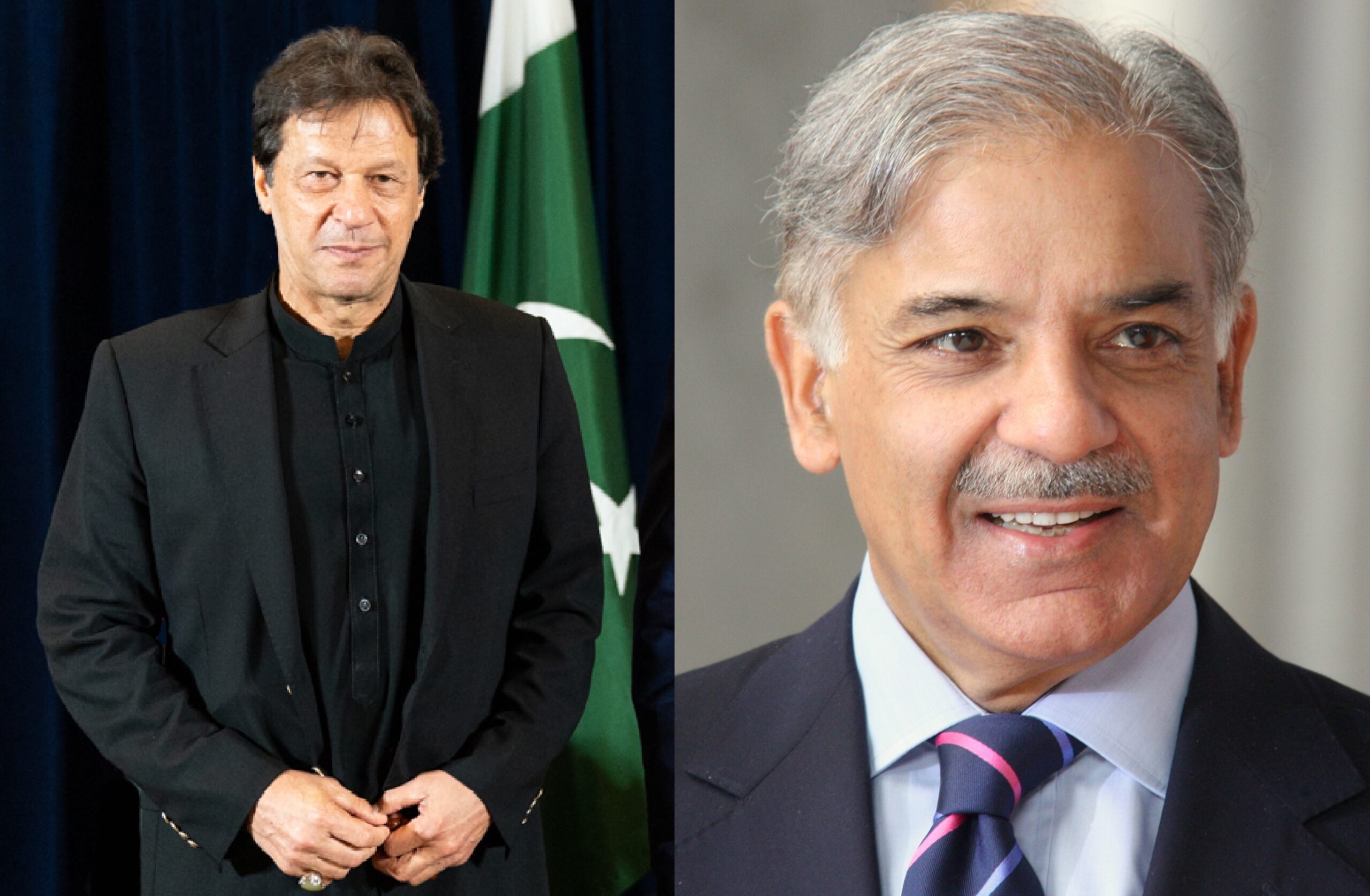
Imran Khan has been ousted as the Pakistan Prime Minister after losing the opposition’s no-trust motion on Sunday, 10 April, with 174 members in the 342-strong National Assembly (NA) voting in favour of the resolution. Khan has now become the first Prime Minister in the history of Pakistan to be ousted through a no-confidence vote. Before him, Shaukat Aziz in 2006, and Benazir Bhutto in 1989, survived the moves against them.
Reacting to Khan’s ouster, Shehbaz Sharif, who is the joint opposition’s candidate for the premier’s post, said in a tweet last Sunday that the country and Parliament have been “finally freed from a serious crisis”. “Congratulations to the Pakistani nation on a new dawn,” he added. After Sadiq announced the ouster of Khan, Sharif told the NA that the new government “would not indulge in politics of revenge”.
“I don’t want to go back to bitterness of the past. We want to forget them and move forward. We will not take revenge or do injustice; we will not send people to jail for no reason, law and justice will take its course,” Dawn news quoted the PML-N leader as saying.
Pakistan People’s Party (PPP) Bilawal Bhutto-Zardari then took the floor and said: “welcome back to purana (old) Pakistan”, adding that “democracy is the best revenge”.
As voting on the resolution began just a few minutes before midnight, members from Khan’s ruling Pakistan Tehreek-e-Insaf party walked out of the house and did not participate in the balloting process. Sunday’s development comes after an alliance of opposition parties on March 28 presented the no-confidence motion against Khan in the NA. Earlier on 3 April, the Deputy Speaker of the NS rejected the no-confidence motion over the alleged involvement of foreign hands in the conspiracy to topple the Pakistani government. Four days later, the Supreme Court of Pakistan declared the Deputy Speaker’s action as a violation of the constitution of the country. The apex court ordered the NA to summon a session of the house and conduct voting on the no-confidence motion.
According to the procedure and rules, the house has since sent the result of the no-confidence motion to the country’s President for approval and permission which kicksarted the election of a new Prime Minister, who has now been chosen unopposed as PMLN Party’s Shehbaz Sharif, brother of former Prime Minister Nawaz Sharif. Meanwhile, Khan, who was elected Prime Minister in 2018 and had promised to fight corruption and fix the economy, has said he would not recognise an opposition government, claiming, without evidence, that there was a US-led conspiracy to remove him because of his refusal to stand with Washington on issues against Russia and China. He has resigned and repeatedly said that Pakistan’s opposition parties are working with foreign powers.
He tweeted: “Pakistan became an independent state in 1947; but the freedom struggle begins again today against a foreign conspiracy of regime change. It is always the people of the country who defend their sovereignty & democracy.”
The US has said there was “no truth” in these allegations, and Khan has never provided any evidence. Addressing the media on Sunday, PTI senator Faisal Javed Khan said Khan walked out of his prime ministerial residence “gracefully and he didn’t bow down”. The Senator added that the former premier had “lifted the entire nation”.
Columnist and TV Broadcaster, Mohammed Shafiq tweeted: “A very dark day for #Pakistan but #ImranKhan will be back stronger and the people stand with him. This may be the end of one chapter but is not the end of the story.”
Writer Taj Ali also tweeted: “Imran Khan wasn’t voted out by the Pakistani public. He was ousted by 174 opposition politicians who joined forces in the National Assembly. Millions of Pakistanis didn’t get a say in the matter and Shehbaz Sharif has no democratic mandate to lead Pakistan.”